먼저 가격의 종류부터 나눠야 합니다. API 호출 한 번의 출력 가격, Gemini 앱 구독료, 서드파티 credit은 서로 다른 계약입니다. 이 셋을 섞으면 가장 싼 숫자를 찾아도 실제 API 예산은 틀립니다.
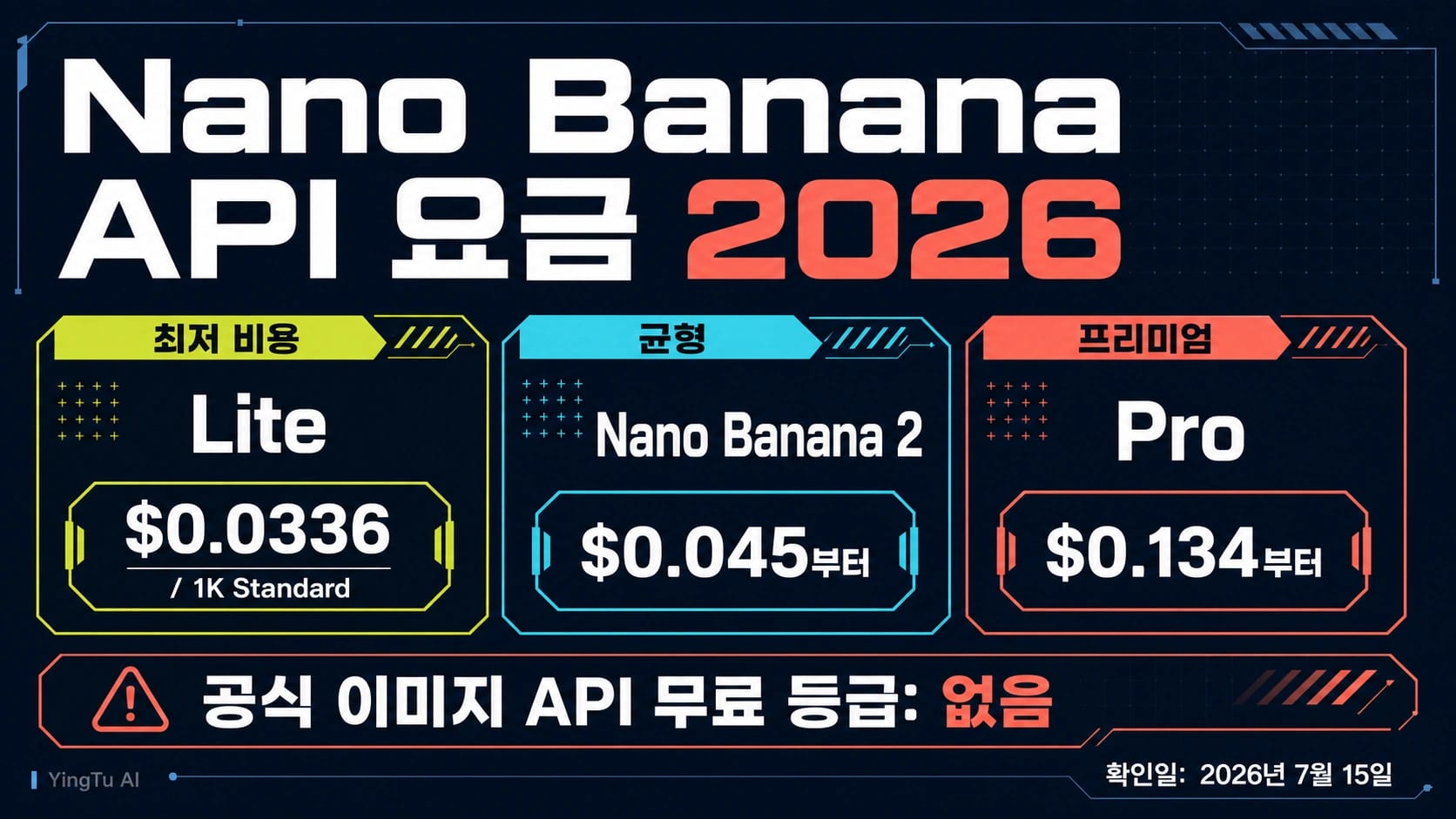
2026년 7월 15일 기준 공식 Nano Banana 이미지 API는 한 가격이 아닙니다. 1K 비용을 우선하면 Lite Standard $0.0336, 여러 해상도가 필요하면 Nano Banana 2가 $0.045부터, Pro는 1K/2K $0.134부터입니다.
| 필요한 결과 | 먼저 시험할 공식 모델 | 현재 Standard 시작 가격 |
|---|---|---|
| 1K면 충분하고 단가가 우선 | Nano Banana 2 Lite, gemini-3.1-flash-lite-image | $0.0336 |
| 0.5K·1K·2K·4K를 선택해야 함 | Nano Banana 2, gemini-3.1-flash-image | $0.045(0.5K) |
| Pro 기능이 필수이거나 승인율이 확실히 높음 | Nano Banana Pro, gemini-3-pro-image | $0.134(1K/2K) |
현재 공식 image API 행에는 Free Tier가 없습니다. API key는 호출 자격 증명이지 무료 이미지 이용권이 아닙니다. 작업이 기다릴 수 있을 때만 Batch/Flex 가격을 적용하고, 앱 구독과 provider credit은 별도 장부로 남깁니다.
공식 가격표를 모델·해상도·모드로 읽기
Gemini API 공식 가격이 숫자의 기준이고, 이미지 생성 문서가 현재 model ID와 legacy migration을 설명합니다.
| 공식 모델 | 해상도 | Standard 이미지당 | Batch 또는 Flex 이미지당 | image API Free Tier |
|---|---|---|---|---|
Lite — gemini-3.1-flash-lite-image | 1K | $0.0336 | Batch $0.0168 | 없음 |
Nano Banana 2 — gemini-3.1-flash-image | 0.5K | $0.045 | Batch $0.022 | 없음 |
Nano Banana 2 — gemini-3.1-flash-image | 1K | $0.067 | Batch $0.034 | 없음 |
Nano Banana 2 — gemini-3.1-flash-image | 2K | $0.101 | Batch $0.050 | 없음 |
Nano Banana 2 — gemini-3.1-flash-image | 4K | $0.151 | Batch $0.076 | 없음 |
Pro — gemini-3-pro-image | 1K 또는 2K | $0.134 | Batch/Flex $0.067 | 없음 |
Pro — gemini-3-pro-image | 4K | $0.240 | Batch/Flex $0.120 | 없음 |
Legacy — gemini-2.5-flash-image | 가격표의 output 행 | $0.039 | Batch $0.0195, Priority $0.0702 | 없음 |
$0.067만 적으면 의미가 둘입니다. Nano Banana 2 1K Standard와 Pro 1K/2K Batch/Flex가 모두 $0.067이기 때문입니다. model ID, mode, resolution을 함께 적어야 합니다. 또한 Pro는 1K와 2K가 같은 가격이지만 Nano Banana 2는 해상도마다 가격이 달라집니다.
공식 가격에 포함되는 것과 빠지는 것
표시된 output row는 baseline입니다. 성공한 공식 API output 한 장을 예산화하는 데는 유용하지만, 최종 invoice, input image, retry, grounding, 실패 작업, provider billing rule까지 포함하지 않습니다.
image input은 별도입니다. Google은 Gemini 3 Pro Image input image를 560 tokens, 즉 이미지 입력 1장당 약 $0.0011로 제시합니다. 모든 generation이 reference image 1장을 보낸다면 100회는 약 $0.11, 1000회는 약 $1.10이 output과 별도로 붙습니다. reference image가 여러 장이면 더 커집니다.
Grounding, editing, retry, failed attempt, queueing, accepted-output rule은 route에 따라 달라질 수 있습니다. 공식 output row는 Google API lane에서 성공 output이 얼마인지 말해 주지만, provider가 실패 생성에 과금하는지, refund하는지, retry를 숨기는지, log를 보존하는지까지 보장하지 않습니다.
| budget line | owner | 처리 방식 |
|---|---|---|
| Pro output price | Google official API pricing | size와 Standard/Batch/Flex row를 checked date와 함께 사용합니다. |
| image input | Google official API pricing | reference image를 보낼 때 input image당 $0.0011을 추가합니다. |
| grounding / special behavior | Google docs and pricing | 사용 전 별도 확인하고 일반 output 가격과 섞지 않습니다. |
| app, subscription, provider, gateway | 해당 surface owner | 명시 계약 없이는 official API cost에 포함하지 않습니다. |
무료 티어 경계: key, 앱, 구독, provider credit
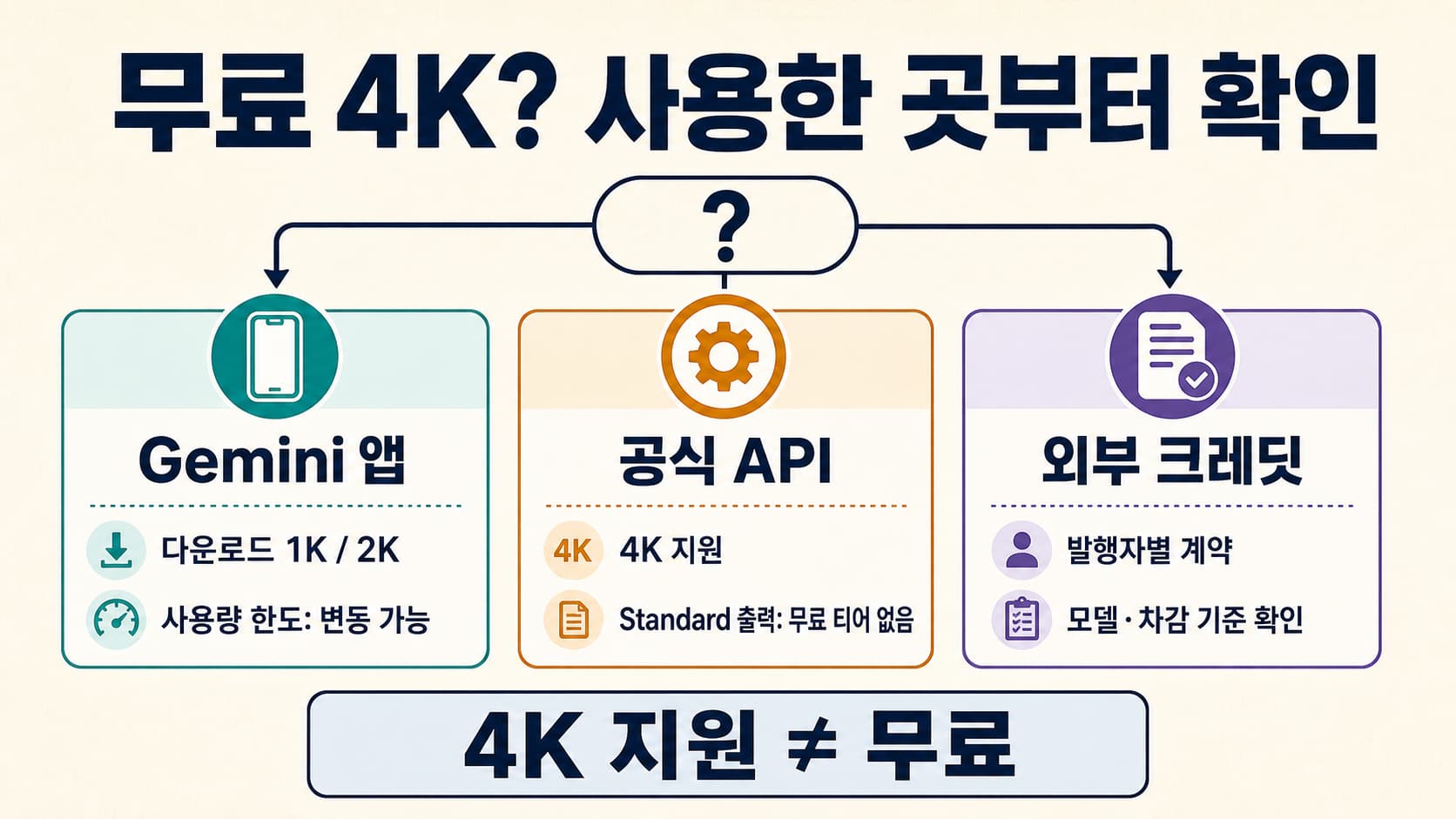
무료 제공 여부는 한국어 자료에서 가장 쉽게 섞입니다. API key를 만들 수 있다는 것은 Pro image API output이 무료라는 뜻이 아닙니다. Gemini 앱에서 매일 몇 장을 손으로 만들 수 있다는 것도 Developer API billing entitlement가 아닙니다. 구독은 consumer access 계약이고, provider credit은 provider dashboard balance입니다.
| surface | 의미할 수 있는 것 | 증명하지 못하는 것 |
|---|---|---|
| API key | project credential, auth, quota, billing setup | 무료 Pro image output entitlement |
| Developer API 공식 과금 행 | 공식 모델, output price, 무료 제공 상태, billing owner | 앱 quota 또는 provider credit |
| Gemini app / consumer plan | manual access, app limit, export rule, plan eligibility | 공식 API 이미지당 비용 |
| subscription / partner surface | monthly plan, credit pool, reset cadence | Google-wide API 사용권 |
| provider / gateway credit | dashboard balance, model route, logs, support, refund | Google official price row |
공식 API 예산 관점의 답은 명확합니다. Pro image API row에는 Free Tier가 없습니다. 어떤 글이 Nano Banana Pro를 무료라고 말하면 앱 무료 생성, 구독 혜택, trial credit, provider balance, Google pricing row 중 무엇을 뜻하는지 먼저 확인해야 합니다.
모델을 먼저 고르고, 기다릴 수 있을 때 모드를 바꾸기
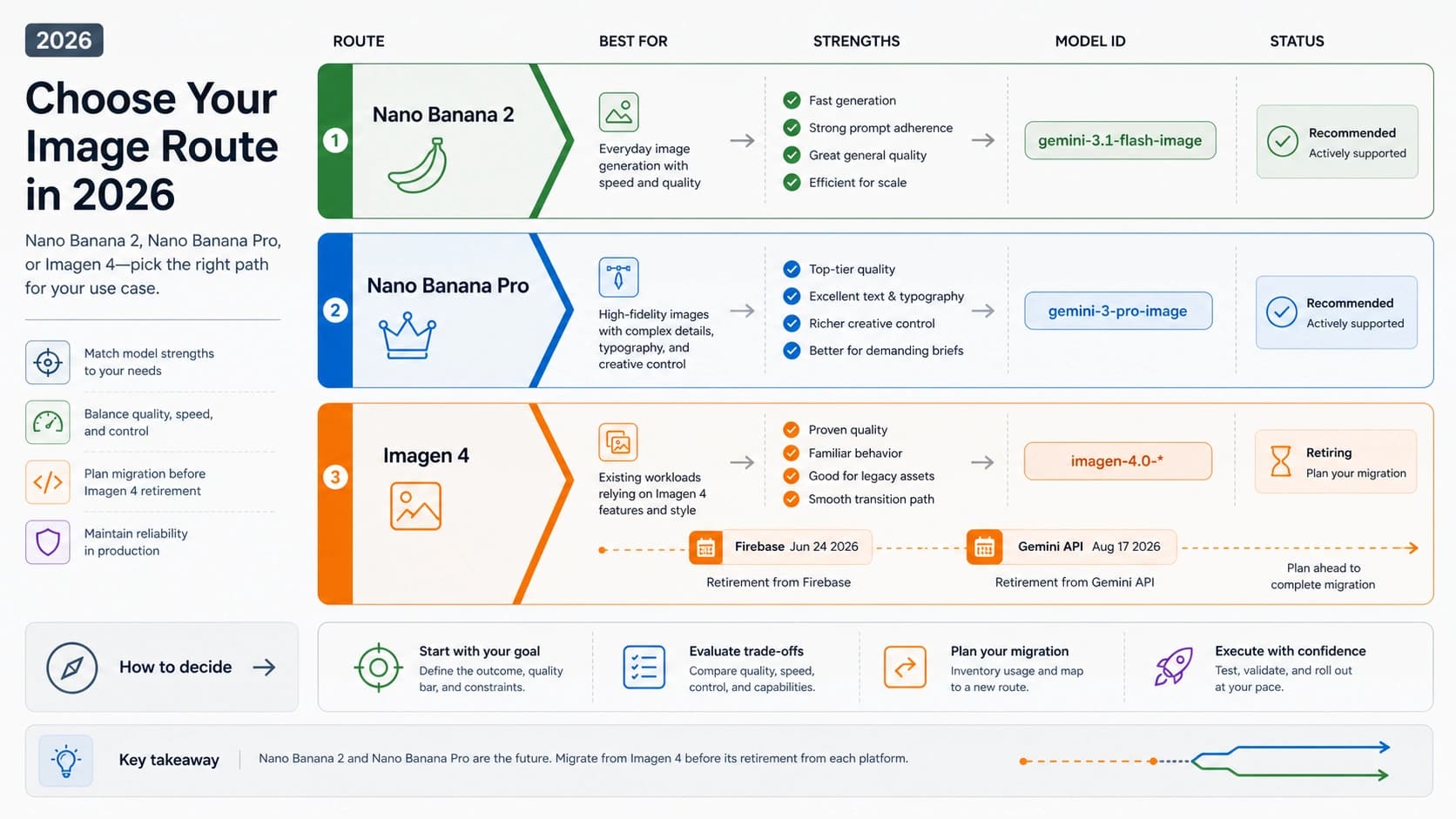
더 싼 길은 있지만 모두 싼 Pro는 아닙니다. Batch/Flex는 여전히 Pro이고 gemini-3-pro-image입니다. 실행 방식이 달라서 싸집니다. Nano Banana 2와 Nano Banana 2 Lite는 다른 공식 model lane이므로 Pro price가 아니라 alternatives decision에 넣어야 합니다.
| alternative lane | official model ID | Standard output price | Batch/Flex 또는 Batch | 숫자를 쓰는 법 |
|---|---|---|---|---|
| Nano Banana Pro Batch/Flex | gemini-3-pro-image | 필요할 때만 Standard | 1K/2K $0.067; 4K $0.12 | latency를 기다릴 수 있는 공식 Pro 할인 |
| Nano Banana 2 | gemini-3.1-flash-image | 0.5K $0.045; 1K $0.067; 2K $0.101; 4K $0.151 | $0.022, $0.034, $0.050, $0.076 | 더 낮은 공식 image route, Pro 가격 아님 |
| Nano Banana 2 Lite | gemini-3.1-flash-lite-image | 1K $0.0336 | 1K $0.0168 | 품질과 기능 경계가 맞을 때 최저 공식 lane |
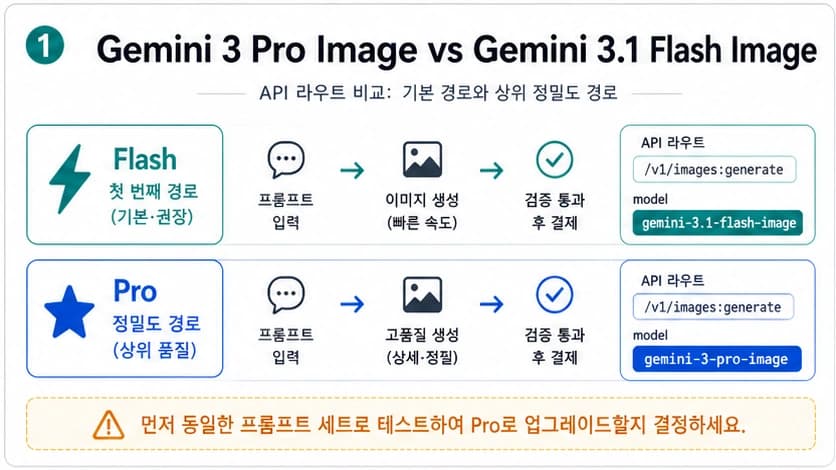
동일한 prompt, input image, 해상도, 승인 기준으로 20~50개 sample을 시험합니다. Lite가 1K 요구를 충족하면 그대로 사용하고, 해상도 선택 폭이 필요하면 Nano Banana 2를 봅니다. Pro 기능이나 더 높은 승인율이 가격 차이를 상쇄할 때만 Pro로 올립니다. 그 다음 interactive 작업은 Standard, 완료를 기다릴 수 있는 작업은 Batch/Flex를 선택합니다.
승인 이미지 한 장의 비용으로 예산 다시 계산하기
호출 단가가 낮아도 재생성이 많으면 실제 제작비는 높습니다. 계산식은 다음과 같습니다.
승인 이미지당 실제 비용 = 목록 단가 ÷ 승인율
Nano Banana 2 1K Standard가 $0.067이고 100장 중 80장만 승인된다면 실제 비용은 $0.067 ÷ 0.80 = $0.08375입니다. 탈락한 20장도 모델 비용과 검수 시간을 사용했습니다.
| 경로 | 100장 Standard | 1,000장 Standard | 100장 Batch/Flex | 1,000장 Batch/Flex |
|---|---|---|---|---|
| Lite 1K | $3.36 | $33.60 | $1.68 | $16.80 |
| Nano Banana 2 1K | $6.70 | $67.00 | $3.40 | $34.00 |
| Nano Banana 2 2K | $10.10 | $101.00 | $5.00 | $50.00 |
| Nano Banana 2 4K | $15.10 | $151.00 | $7.60 | $76.00 |
| Pro 1K/2K | $13.40 | $134.00 | $6.70 | $67.00 |
| Pro 4K | $24.00 | $240.00 | $12.00 | $120.00 |
Pro image input은 입력 이미지 한 장당 약 $0.0011입니다. 요청 1,000회마다 reference image 한 장을 보내면 약 $1.10을 더합니다. grounding, retry, 탈락 이미지, 검수, provider 수수료는 이 표 밖입니다.
Legacy Nano Banana는 이름만 바꾸지 말고 평가 후 이전하기
기존 코드와 청구서에는 gemini-2.5-flash-image가 남아 있을 수 있습니다. 현재 행은 Standard $0.039, Batch $0.0195, Priority $0.0702이며 Google은 Lite로 이전할 것을 권장합니다. 대표 prompt와 input, 해상도, 승인 기준을 고정해 legacy와 gemini-3.1-flash-lite-image를 나란히 시험한 뒤 승인율과 총비용이 맞을 때 production model ID를 바꿉니다. Legacy 가격을 Nano Banana 2나 Pro 가격으로 다시 붙이면 안 됩니다.
provider 가격을 별도 결정으로 보는 시점
provider route는 현지 결제, unified logs, OpenAI-compatible endpoint, support, 낮은 표시 단가, 쉬운 dashboard라는 장점을 줄 수 있습니다. 그러나 그것은 official Google API pricing이 아닙니다.
| provider proof item | 의존 전 확인할 증거 |
|---|---|
| model route | dashboard, request log, accepted output이 실제 model을 보여 주는가 |
| accepted-output billing | failed generation, retry, refund, hidden credit 차감 규칙 |
| throughput / limits | 실제 workload에서 RPM, queue, concurrency가 어떻게 움직이는가 |
| support / billing | invoice, order, logs, support channel이 production review에 충분한가 |
| data / rights | reference image, output retention, commercial use, deletion policy |
provider-specific decision은 Nano Banana Pro API route validation guide에서 다루는 편이 맞습니다. 여기서는 official baseline을 세우고, provider route는 검증 checklist로 넘깁니다.
실무 예산 시나리오
작은 디자인 테스트라면 Standard output row로 시작합니다. 2K Pro 10장은 output fee 약 $1.34입니다. 자동화를 만들기 전에 Pro 품질이 필요한지 보는 데 충분합니다.
대량 asset refresh라면 Standard와 Batch/Flex를 초기에 비교합니다. 2K 1000장은 Standard $134.00, Batch/Flex $67.00입니다. 기다릴 수 있는지 자체가 가격 결정입니다.
고해상도 production은 4K lane으로 따로 봅니다. 4K 1000장은 Standard $240.00, Batch/Flex $120.00입니다. reference upload, revision pass, rejected output을 별도 budget line으로 두면 숫자가 더 현실적입니다.
모델 선택이 문제라면 Pro, Nano Banana 2, Lite, 다른 image route를 비교합니다. cross-model 판단은 GPT Image 2 vs Nano Banana Pro comparison에서 이어가면 됩니다.
숫자를 쓰기 전 체크리스트
Nano Banana 가격을 예산에 넣기 전에 다섯 항목을 확인합니다.
- Model: Nano Banana Pro는 gemini-3-pro-image, Nano Banana 2는 gemini-3.1-flash-image, Lite는 gemini-3.1-flash-lite-image.
- Mode: Standard, Batch/Flex, Batch.
- Resolution: 0.5K, 1K, 2K, 4K.
- Scope: output only인지, input image, grounding, retry, special feature를 포함하는지.
- Route owner: Google official API, Gemini app, partner, subscription, provider, gateway.
하나라도 빠진 가격은 clue일 수 있지만 production budget에는 부족합니다. 가장 흔한 실수는 가장 싼 Nano Banana 숫자를 official Pro price로 쓰는 것입니다. 더 안전한 습관은 model, owner, mode, resolution, checked date를 가격 옆에 쓰는 것입니다.
자주 묻는 질문
Nano Banana Pro API는 이미지당 얼마인가요?
2026년 7월 15일 기준 official Pro API output price는 Standard 1K/2K $0.134, 4K $0.24입니다. Batch/Flex는 1K/2K $0.067, 4K $0.12입니다.
Nano Banana Pro API에 Free Tier가 있나요?
공식 Pro image API row에는 없습니다. API key 생성, Gemini 앱 quota, 구독 혜택, trial credit, provider credit은 무료 official API entitlement가 아닙니다.
왜 1K와 2K Pro 가격이 같은가요?
현재 gemini-3-pro-image pricing row가 1K와 2K를 같은 가격으로 묶기 때문입니다. Nano Banana 2, Lite, 4K Pro는 별도 row입니다.
4K Nano Banana Pro는 더 비싼가요?
네. Standard 4K는 $0.24이고 1K/2K는 $0.134입니다. Batch/Flex 4K는 $0.12, 1K/2K는 $0.067입니다.
Batch/Flex는 공식 가격을 바꾸나요?
네. Google API의 공식 mode입니다. 단, workload가 batch나 flexible execution을 받아들일 수 있을 때만 사용합니다.
Nano Banana 2는 Pro와 같은 가격인가요?
아닙니다. Nano Banana 2는 gemini-3.1-flash-image이고 Pro는 gemini-3-pro-image입니다. Nano Banana 2의 낮은 가격을 Pro 가격으로 쓰면 안 됩니다.
가장 저렴한 공식 Nano Banana-family API는 무엇인가요?
Nano Banana 2 Lite 1K row입니다. Standard는 $0.0336, Batch는 $0.0168입니다. Pro가 아니므로 품질 경계가 맞을 때만 사용합니다.
Gemini 또는 Google AI 구독에 API 비용이 포함되나요?
그렇게 가정하면 안 됩니다. consumer plan과 Developer API billing은 다른 계약입니다.
provider가 더 싼 Nano Banana Pro 가격을 줄 수 있나요?
가능하지만 provider contract입니다. model route, accepted-output billing, failed-job policy, logs, support, data terms를 검증해야 합니다.
개발자는 어떤 model ID를 써야 하나요?
Nano Banana Pro는 gemini-3-pro-image, Nano Banana 2는 gemini-3.1-flash-image, Nano Banana 2 Lite는 gemini-3.1-flash-lite-image를 사용합니다.