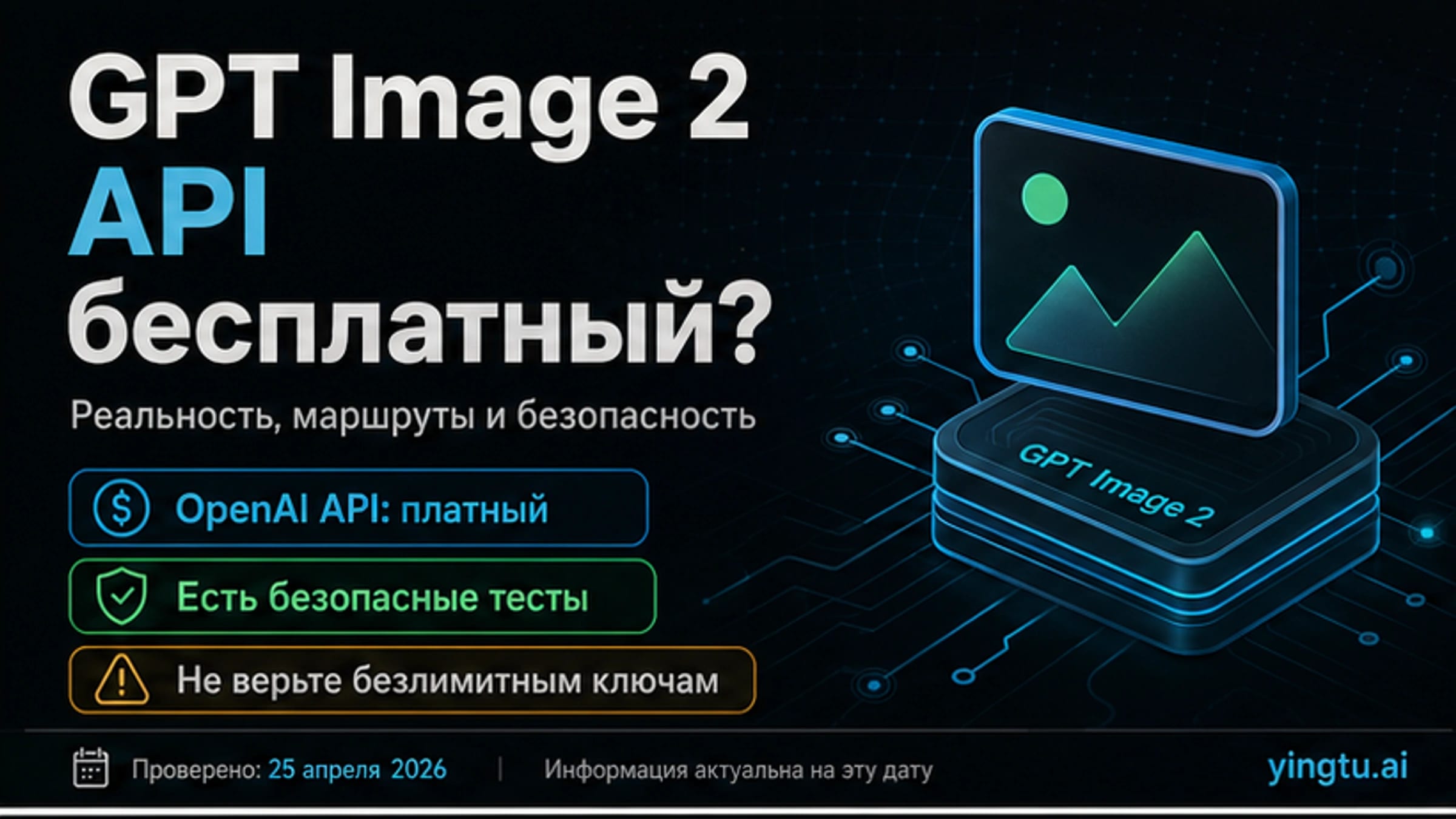
As of 25 April 2026, gpt-image-2 does not have a supported official OpenAI API Free tier. Russian-language access claims may still say “бесплатный GPT Image 2”, “безлимитный доступ” or “free generator”, but those phrases usually describe another route: ChatGPT app quota, a browser generator, a provider trial, a user-pays integration, or a wrapper where the key owner is not visible.
| Route called free | Route owner | Who pays | Good use | Verify first |
|---|---|---|---|---|
| Official OpenAI API | OpenAI | Your API billing account | Production backend integration | Model ID, pricing surface, billing and org status |
| ChatGPT app access | OpenAI consumer app | User quota or plan | Personal testing and creative exploration | It does not normally give a backend API key |
| YingTu browser test | YingTu | Browser or provider route | Quick prompt and output check before integration | Current model, limits, terms, and API-control need |
| Provider trial | Third-party provider | Trial credit first, paid account later | Short evaluation | Renewal, unit price, data terms, failure billing |
| User-pays route | Platform plus end user | End user at runtime | Apps where each user brings account or quota | Consent, privacy, abuse controls, rate limits |
| No-login wrapper | Unclear | Unknown | Usually reject | Key owner, logs, rights, limits, support path |
The safe question is not “can I find a page that says free?” The safer question is “who owns the route, who pays after the free action, what limit applies, which terms cover prompts and images, and who supports failures?” If those answers are missing, do not use the route for production.
Official OpenAI API answer
OpenAI’s official model ID is gpt-image-2. When the task is backend integration, this model ID and the official image-generation API documentation matter more than a landing-page phrase. The official OpenAI API is a developer surface: it needs an API account, billing, request handling, error handling, logs, storage decisions, and access control. It is not the same as trying an image feature in a consumer app.
The current first-party boundary is simple: do not plan around a free official OpenAI API entitlement for gpt-image-2. OpenAI pricing is not a flat “free image API” contract. It depends on image input, image output, text input, cached input, quality, size, and workflow shape. A free generator page can be useful for curiosity, but it is not the pricing contract for your backend.
This distinction is especially important when Russian-language offers mix “free”, “безлимитный”, ChatGPT Plus availability, provider API access, and online generators. Those categories can all appear around the same model name, but they do not transfer rights, billing, reliability, or support to your application.
Why free access is not one thing
The phrase “бесплатный GPT Image 2 API” can mean at least six different things. It can mean a human can generate images in ChatGPT, a site offers a limited browser generator, a provider gives trial credits, a platform shifts cost to the end user, a marketplace exposes a paid API after signup, or a wrapper hides the actual key. These are different contracts.
ChatGPT app quota is a product experience. It can help you learn how the model behaves with Russian text, product prompts, layouts, and edits. It does not normally give you a server key, retry logic, usage logs, or guaranteed API capacity. Treat it as product testing, not API credit.
Provider trials can be useful, but they are provider-owned. The provider decides how much credit exists, what happens after the trial, how many images are included, whether failed requests are charged, which quality or size is default, and how long prompts and outputs are retained. If the provider does not state these pieces, the free label is not enough.
ChatGPT access is not backend API credit
ChatGPT Images 2.0 and gpt-image-2 API may share model branding, but they solve different jobs. A creator can use ChatGPT to experiment with prompts and understand output style. A developer needs an API route that can be monitored, retried, billed, secured, and integrated into product logic.
If you only need to decide whether the model is visually good enough, app access or a browser test may be fine. If you are building a customer-facing feature, you must test the actual API path. You need to see request format, response payload, moderation behavior, storage plan, error codes, timeout behavior, and real cost.
That is why a Russian article should not turn “free for ChatGPT users” into “free API”. The first is about a consumer app. The second is about a developer contract. Keeping them separate prevents wrong product promises.
Safe test routes
YingTu belongs in the browser-test category. Use it when the job is to validate prompts, show a teammate what GPT Image 2 output can look like, or decide whether an API build deserves engineering time. Keep the boundary visible: it is a test route, not official OpenAI API credit.
Provider marketplaces and API gateways can be evaluated next. They are legitimate only when their owner, limit, price unit, data handling, and support path are visible. A provider can be a good evaluation route without being the right production route. The reader should not confuse a free trial or cheap call with OpenAI’s official contract.
User-pays routes are a different product design. They can reduce your central server bill, but they require explicit user consent, privacy explanation, abuse protection, and support language. They are not truly free for the user if the user pays through a session, account, balance, or platform quota.
Verification sequence
First, confirm the model name. If the page does not name gpt-image-2, you may be testing another image model or a provider alias. Second, identify the payer. Official OpenAI API means your API billing account; ChatGPT means app quota; provider trial means temporary credit; user-pays means the end user pays; unclear wrapper means you do not know.
Third, run a complete path. Browser output is not enough if your product needs programmatic calls, edits, storage, logs, retries, or predictable output count. Fourth, read the terms for the risk level. A casual prompt test needs less diligence than a paid workflow or user-image upload.
Fifth, record the checked date. GPT Image 2 is fresh and route claims can change quickly. A provider credit, a free generator, or a model availability claim that is true during launch week may be stale a week later.
Which route to choose now
Choose official OpenAI API when production accountability matters: first-party billing, official documentation, support expectations, compliance, logs, and a direct route for failures. This is the default for customer-facing image features, internal tools with audit needs, and paid products.
Choose YingTu when the task is quick browser testing. It can reduce friction before developers wire up keys and storage. If the browser test proves the idea, then decide whether to build on official OpenAI, compare providers, or stop.
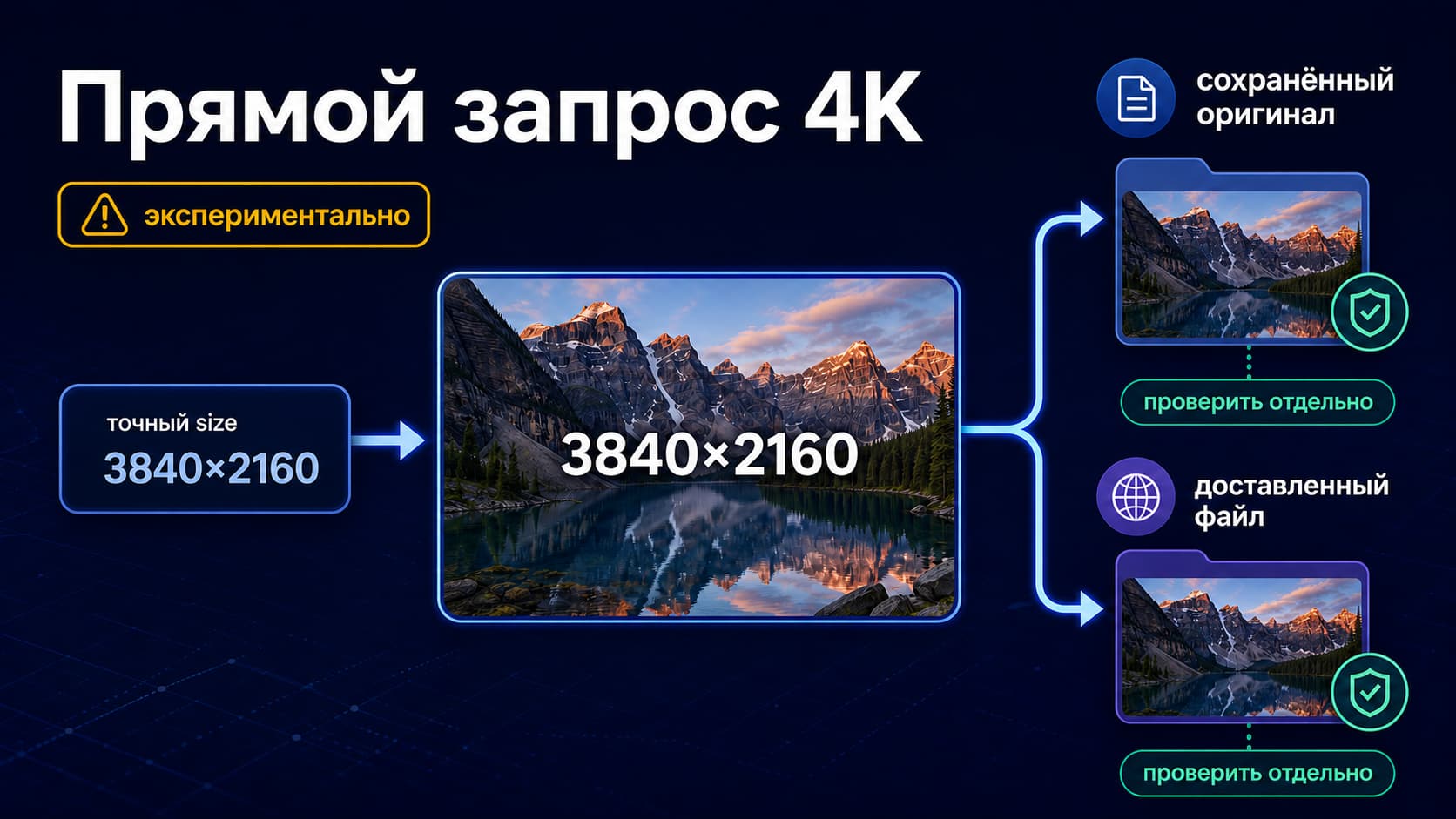
Choose a provider trial when you need to compare access, latency, output quality, or billing shape. Move to /ru/posts/gpt-image-2-api-cheap when the real question becomes the cheapest paid route. Move to /ru/posts/gpt-image-2-4k-image-generation when the question becomes resolution, 4K output, or image-size control.
Production stop rules
Do not ship a free-labeled route if you cannot identify the key owner, billing trigger, route limit, data terms, support owner, and fallback plan. A route can be enough for a demo and still be wrong for production.
Reject unlimited claims by default. “Безлимитный бесплатный GPT Image 2 API” is not a contract unless the owner explains who pays, how abuse is controlled, what happens under load, and how support works. The more generous the promise, the more concrete the proof must be.
Reject shared-key flows for real user data. If you do not know whose key is used, how prompts and images are logged, or whether users consented, the risk is cost, privacy, rights, and support at the same time.
FAQ
Is there an official free GPT Image 2 API key?
No. Do not build around an official free OpenAI API key for gpt-image-2. Use official API access for production and treat alternatives as separate route contracts.
Does ChatGPT free image access give API credit?
No. ChatGPT app access is a consumer surface. It can help users test the product, but it does not normally create backend API credit.
Can I test without paying OpenAI API costs first?
Yes, but call it testing. A browser playground, provider trial, or user-pays route can help evaluation when the owner, limit, payer, and terms are clear.
Is a provider trial safe for production?
Not by itself. Production needs price-unit clarity, failure billing, rate limits, data terms, support, and fallback planning.
Are no-login GPT Image 2 sites safe?
Only if they disclose route owner, key handling, limits, billing trigger, data terms, and support path. If these are missing, reject them for production and sensitive prompts.