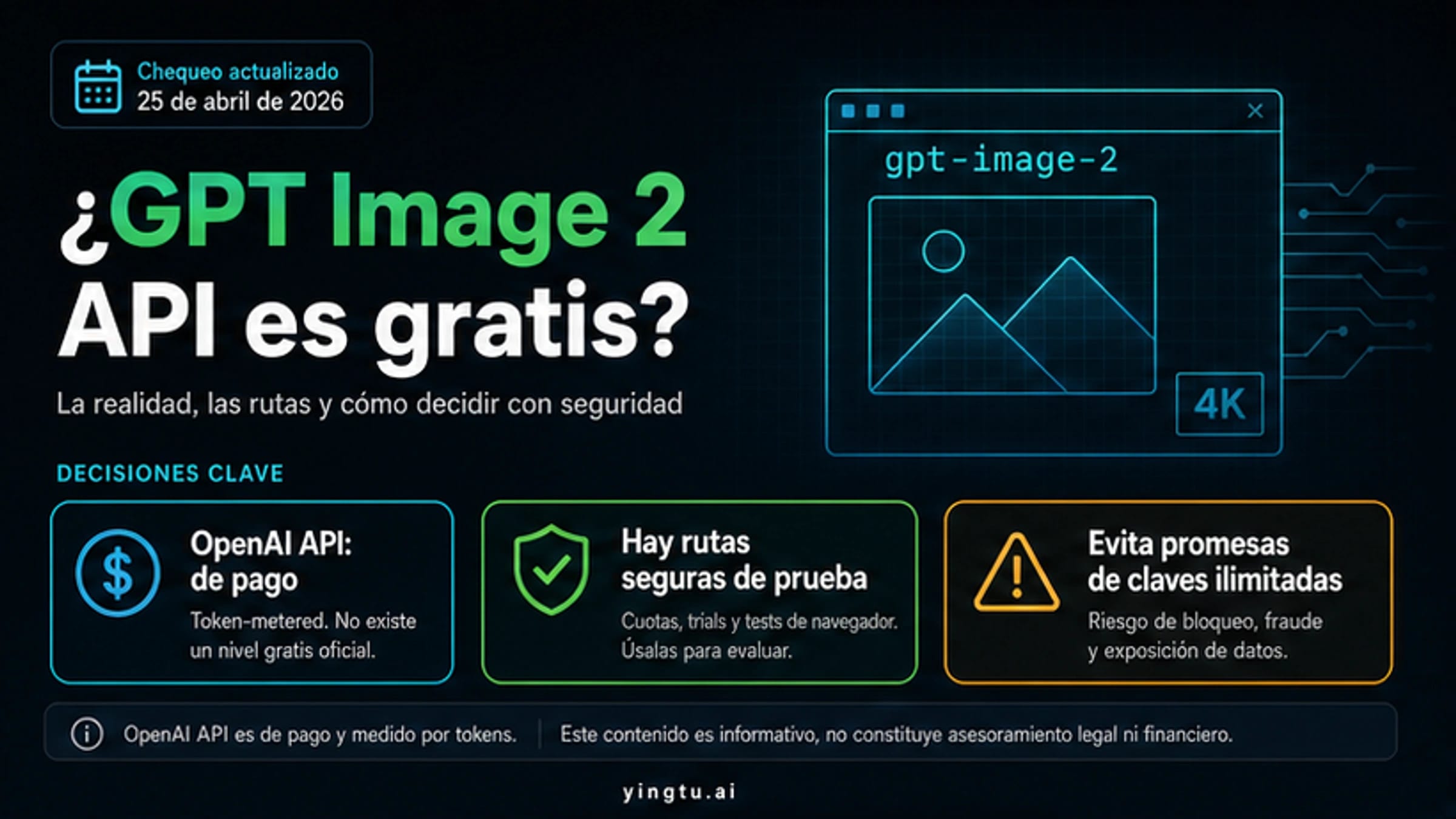
As of April 25, 2026, gpt-image-2 does not have a supported official OpenAI API Free tier. In Spanish-language access offers, “GPT Image 2 API gratis” often points to something else: ChatGPT app quota, a free image generator, a browser playground, a provider trial, a user-pays SDK, or a wrapper that does not show who owns the key.
| Ruta llamada gratis | Quién la controla | Quién paga | Para qué sirve | Qué revisar antes |
|---|---|---|---|---|
| API oficial de OpenAI | OpenAI | Tu cuenta de API billing | Integración de producto | Model ID, pricing, org and billing status |
| Acceso en ChatGPT | App de consumo de OpenAI | Cuota o plan del usuario | Probar el producto, no backend API | Si entrega credenciales API, normalmente no |
| Prueba en navegador con YingTu | YingTu | Ruta de playground o provider | Validar prompt y salida antes de integrar | Modelo actual, límites, términos, control API |
| Trial de proveedor | Provider externo | Crédito inicial, cuenta pagada luego | Evaluación corta | Renovación, unidad de precio, datos, fallos |
| Ruta user-pays | Plataforma y usuario final | Usuario en tiempo de uso | Apps donde el usuario trae cuenta o saldo | Consentimiento, privacidad, abuso, límites |
| Wrapper sin login | Dueño poco claro | Desconocido | Normalmente rechazar | Key owner, logs, rights, limits, support path |
The safe rule is direct: if the route does not show who owns the key, who pays after the free action, what limit applies, which terms cover prompts and outputs, and who supports failures, do not use it in production. A route can be useful for a demo and still be wrong for a product.
Official OpenAI API answer
OpenAI’s official model ID is gpt-image-2. For backend work, the model documentation, image generation guide, Responses workflows, and pricing surface are the relevant contract references. A Spanish “generador gratis” route can help you see an output, but it does not define the official OpenAI API entitlement.
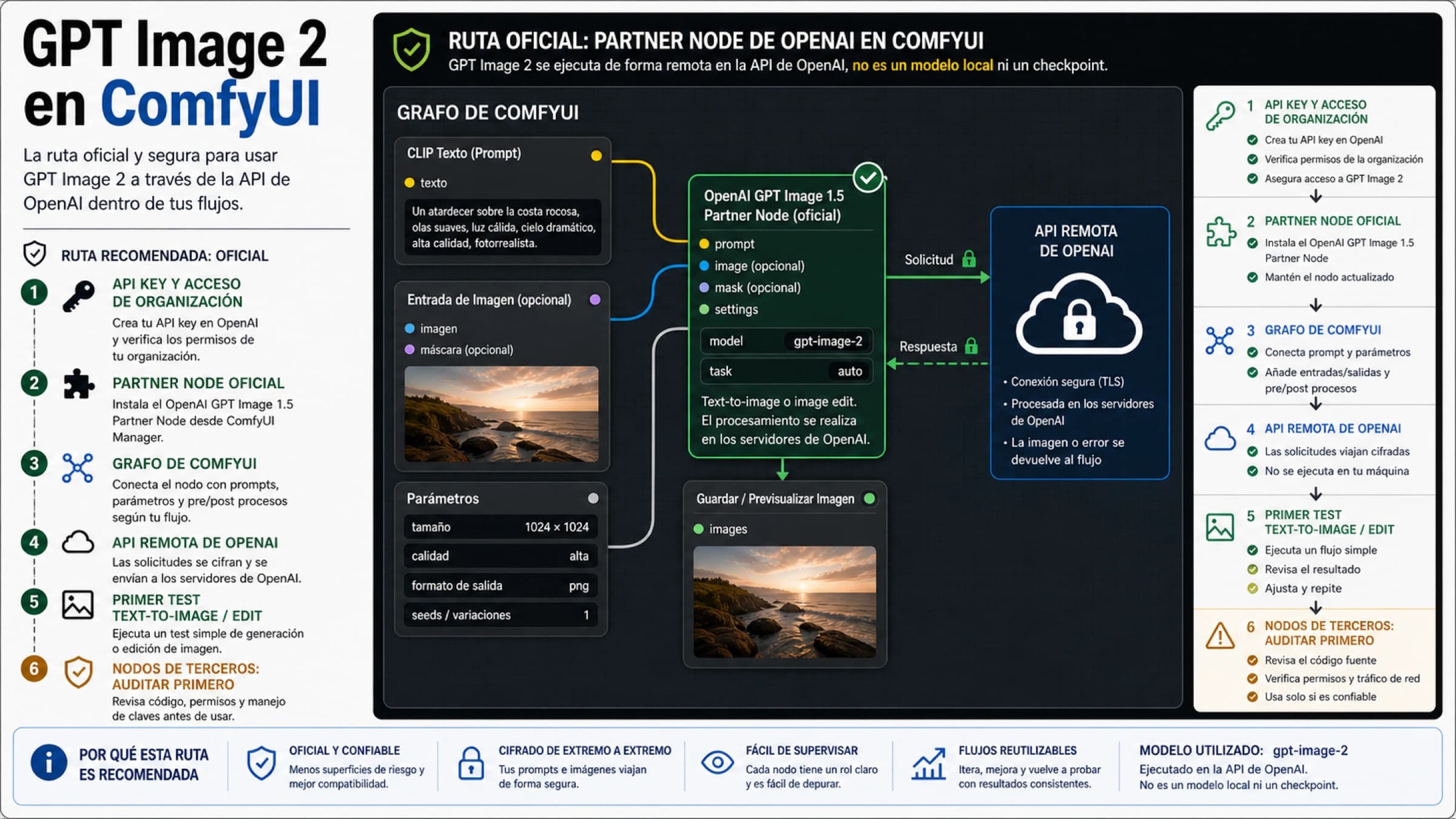
The official API is a developer surface. It needs an API key, billing, request and response handling, failure handling, logging, storage, and security decisions. ChatGPT image access is a consumer product surface. It can help a person test the model, but it does not normally create free backend API credit.
Pricing is another clue. OpenAI API pricing for GPT Image 2 depends on token categories, image input, image output, text input, quality, size, and workflow. A route that reduces the API to “gratis” without naming billing, model ID, quality, size, and account status is not describing the first-party API contract accurately.
Why “gratis” hides different routes
Spanish-language access material places YouTube demos, free generators, ChatGPT Imagen 2.0 guidance, provider API offers, and official launch notes together. They all help the reader explore GPT Image 2, but they do not answer the same question.
The official API question is whether your backend can call gpt-image-2 through OpenAI without a paid API billing relationship. The answer is no. The app-access question is whether a person can use image generation inside ChatGPT. That is useful, but it is not API credit. The generator question is whether a website lets you create images in the browser. That may be enough for exploration, but it does not prove production rights.
Provider offers add another layer. Some include trials, lower prices, playgrounds, or simplified API endpoints. They can be legitimate evaluation routes, but they own their own terms. The provider decides renewal, price unit, default settings, failure billing, rate limits, retention, and support.
ChatGPT access is not API credit
ChatGPT Images 2.0 and GPT Image 2 API share branding, but they serve different jobs. ChatGPT helps a person test prompts, see visual quality, and explore editing behavior. The API lets an application send requests, store results, handle errors, retry, monitor usage, and pay through a developer account.
If your only question is “does this model produce the visual style I need?”, app access or a browser playground may be enough. If your question is “can my product generate images for users?”, you need to test the actual API path. App success does not prove deployable API capacity.
That is why the first screen should not say “gratis” without a route label. It should say: official OpenAI API is not a free route; ChatGPT access is app-side; browser and provider routes are separate contracts.
Safe test routes
YingTu fits the browser-test job when you need a quick visual check before spending engineering time. Use it to validate prompt direction, compare output behavior, or show a non-engineer what the model can do. Keep the boundary clear: it is not official OpenAI API credit.
A provider trial can help compare access, latency, output quality, and billing shape. It becomes risky when the provider hides failure charging, data retention, support, or fallback options. The question is not only “is the first image free?” It is “free until what event, under whose terms, and with what support path?”
User-pays routes can be valid if your app intentionally lets each user bring an account, session, quota, or platform balance. That reduces your central API bill but changes onboarding, privacy copy, abuse controls, and support. It is not free for everyone; it shifts the payment relationship.
Verification sequence
First, confirm the model name. If the route does not name gpt-image-2, it may be a different model or a provider alias. Second, identify the payer. Official OpenAI API means your account pays; ChatGPT means app quota; provider trial means temporary credit; user-pays means the user pays; unclear wrapper means the payer is unknown.
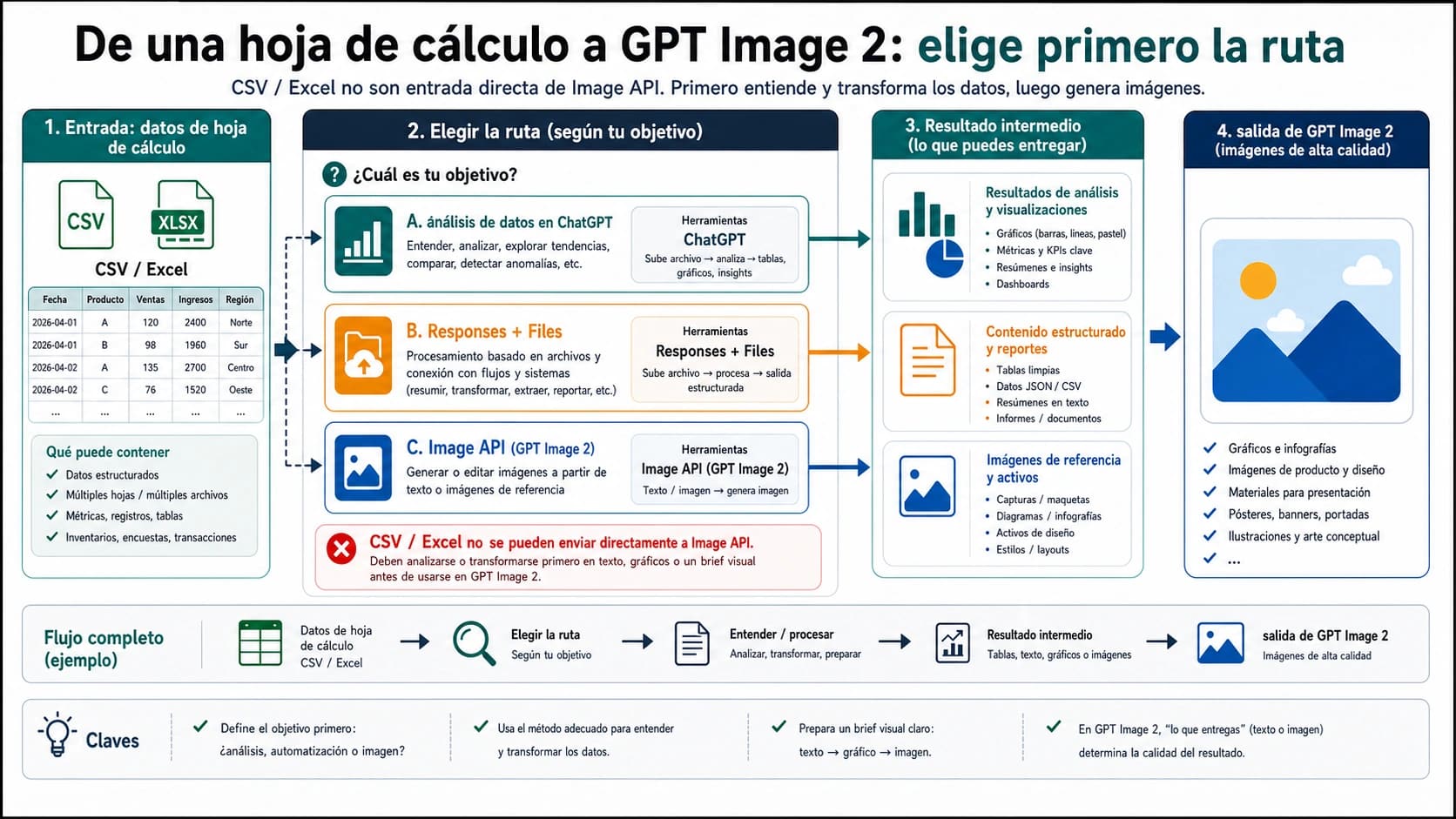
Third, test one complete image path. Browser output is not enough if your product needs API calls, edits, storage, logs, retries, predictable output count, or error reporting. Fourth, read the terms for your risk level. A casual prompt test and a paid workflow with user images need very different diligence.
Fifth, write down the checked date. GPT Image 2 is a fresh launch surface, and free claims, provider credits, pricing, and availability can change quickly. Treat today’s route evidence as current evidence, not a permanent promise.
Which route to choose
Choose official OpenAI API when you need production ownership: first-party billing, official documentation, support expectations, compliance, logs, and a direct route for failures. That is the safest default for customer-facing features, internal tools with audit needs, or paid workflows.
Choose YingTu when the job is a quick browser test. It can save time before developers build key management, storage, and retries. If the test proves the idea, then decide whether official OpenAI, a verified provider, or no build is the right next step.
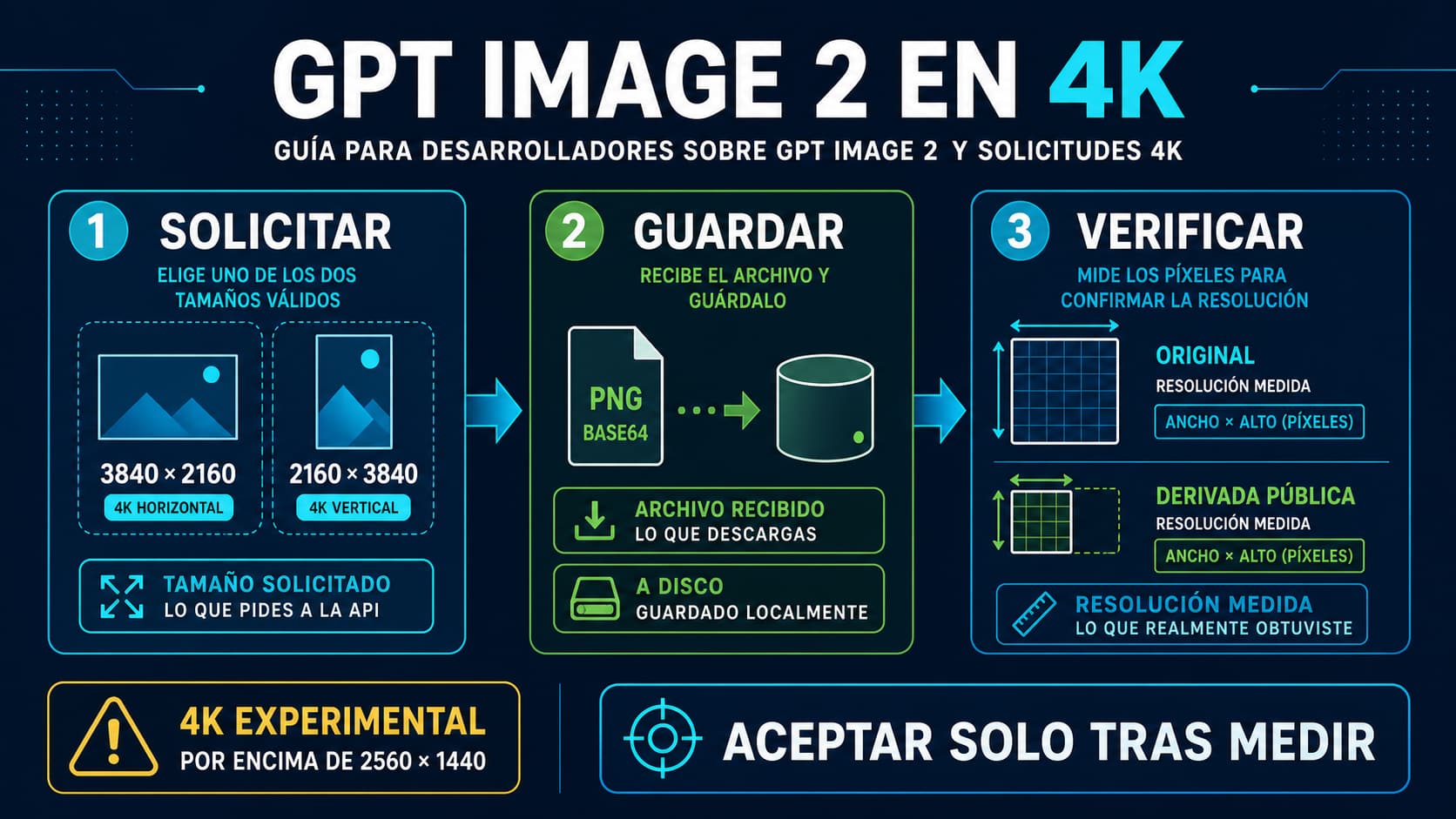
Choose a provider trial when you need to compare access, latency, output quality, or billing shape. If your next question is the cheapest paid route, move to /es/posts/gpt-image-2-api-cheap. If the next question is 4K, size, or resolution control, move to /es/posts/gpt-image-2-4k-image-generation.
Production stop rules
Do not ship a free-labeled route if you cannot identify the key owner, billing trigger, route limit, support owner, data terms, and fallback plan. A demo route can be acceptable for exploration and still fail production readiness.
Reject unlimited claims by default. “API gratis ilimitada”, “sin límites”, “sin bloqueos”, “fallos sin cargo” and “uptime guaranteed” are not production contracts unless the owner proves them with current terms, dashboard evidence, or a contract. The more generous the promise, the stronger the proof must be.
Reject shared-key flows for real user data. If you do not know whose key is being used, how prompts and images are logged, or whether users consented to the route, the issue becomes privacy, security, rights, and support risk, not only cost.
Preguntas frecuentes
Is there an official free GPT Image 2 API key?
No. Do not plan around an official free OpenAI API key for gpt-image-2. Use official API access for production and treat alternatives as separate route contracts.
Does free ChatGPT image access give API credit?
No. ChatGPT is an app surface. It can help users test the product, but it does not normally create backend API credit.
Can I test before paying OpenAI API costs?
Yes, but call it a test route. YingTu browser testing, provider trials, and user-pays routes can help evaluation only when owner, payer, limit, and terms are clear.
Is a provider trial safe for production?
Not by itself. Production requires price-unit clarity, failure billing, rate limits, data terms, support, and fallback planning.
Are no-login GPT Image 2 sites safe?
Only if they disclose route owner, key handling, limits, billing trigger, data terms, and support path. If those pieces are missing, reject them for production and sensitive prompts.