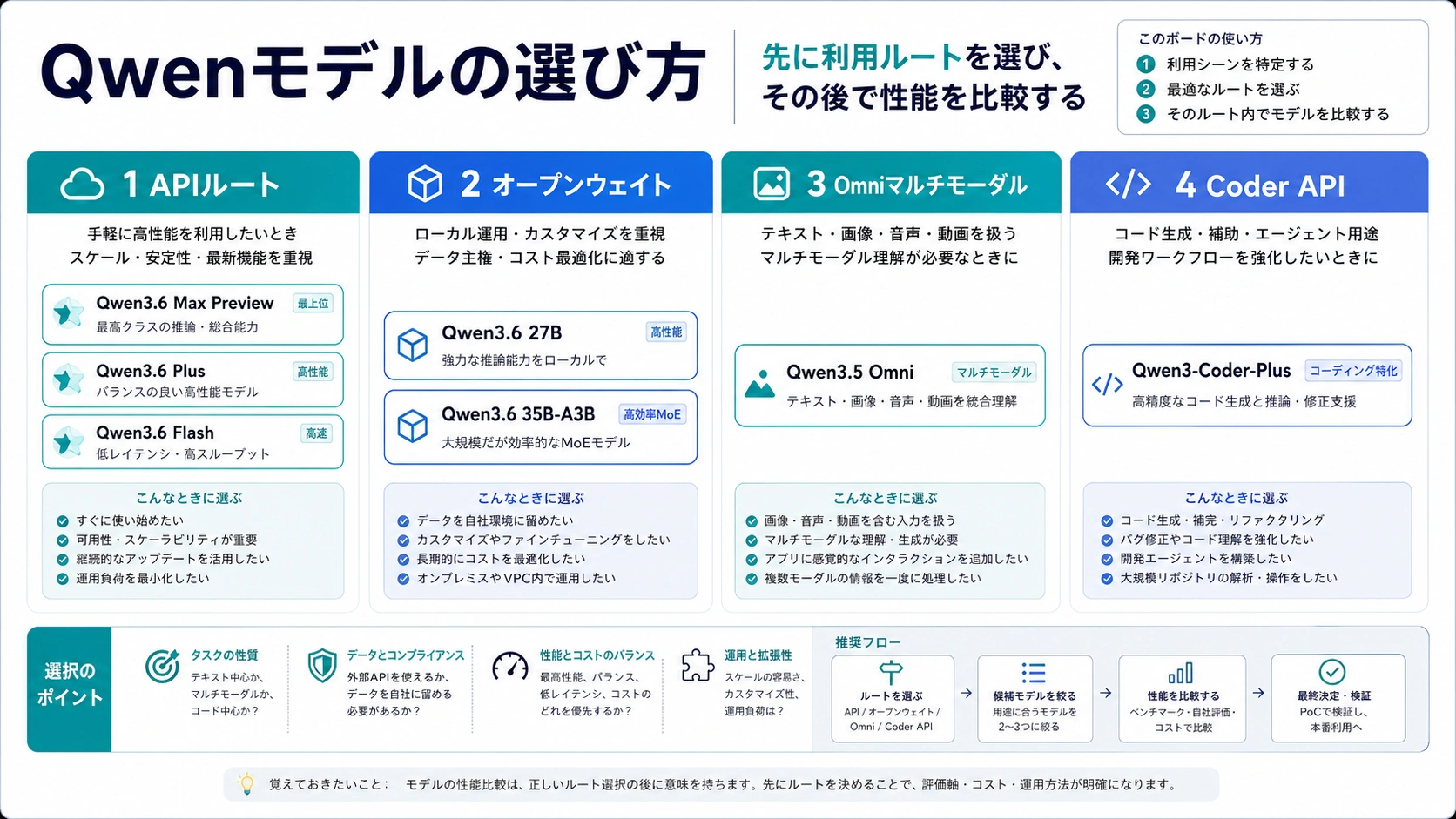
2026年5月8日時点では、Qwenを選ぶときに最初に見るべきなのはモデル名の長さではなく、使う用途と運用形態です。一般的なAPI連携ならPlus系の安定候補を最初に試し、速度やコストが強い制約なら高速API候補を試します。最新の上位挙動を評価するなら評価用の候補、ローカルやサーバーで重みを扱うならdenseまたはMoEのopen-weight候補、音声・画像・動画を扱うならOmni、コード生成やリポジトリ作業を評価するならCoderを別枠にします。
API側の候補はホスト型APIの選択肢です。open-weight側の候補は重みと運用責任の判断です。Omniは入出力の種類を変え、Coderは評価タスクをソフトウェア開発に寄せます。同じQwenという名前でも、確認すべき証拠はモデルID、価格、地域、ライセンス、ハードウェア、tool use、repository contextのどれかに分かれます。

| やりたいこと | 最初に試す候補 | 先にこの用途で見る理由 | 決めつけないこと | 本番前に見る点 |
|---|---|---|---|---|
| 安定した汎用API連携 | Qwen3.6-Plus | support、RAG、抽出、業務自動化で扱いやすいAPI既定候補 | Max-Previewが常に本番向き | model ID、region、price、context、quota |
| 速さやコスト重視のAPI | Qwen3.6-Flash | APIのままlatencyと運用費を抑えたい | Flashと35B-A3Bが同じ種類 | price、rate limit、品質差、利用地域 |
| 最新Max系の品質確認 | Qwen3.6-Max-Preview | 難しいprompt、移行判断、agentic behaviorの確認に向く | previewが長期安定を意味する | preview status、migration、provider support |
| ローカルまたはサーバー運用 | Qwen3.6-27B / 35B-A3B | weights、license、hardware、serving stackを自分で確認できる | open modelがhosted API契約を証明する | model card、license、weights、serving stack |
| 音声・画像・動画 | Qwen3.5-Omni | タスクがtext-onlyではなくmediaを含む | Omniが全てのtext/code用途を置き換える | modalities、latency、streaming、API support |
| コーディングエージェント | Qwen3-Coder-Plus | repository context、patch、test repairを測る必要がある | 一般chat性能がcoding能力そのもの | tooling、context、repo workflow、API availability |
本番投入前に一度止めます。provider catalogやコミュニティ情報は入口発見には役立ちますが、model identity、price、license、context、region、quota、supportを決める主張は、その用途の責任元で確認します。
モデル名より先に用途と運用形態を決める
Qwenファミリーは、単純な大小比較だけでは選びにくくなっています。実務で先に決めるのは、APIをそのまま使うのか、重みを自分で運用するのか、media inputを扱うのか、コード作業を任せるのかです。APIならmodel ID、billing、quota、region、response shapeが重要です。オープンウェイトならlicense、weights version、GPU memory、quantization、prompt template、serving frameworkが重要です。Omniならaudio/video/imageの入出力、Coderならrepository contextとtest feedbackが重要になります。
Qwen公式サイトとAlibaba Cloud Model Studioは、ホスト型APIの名前や能力行を確認する場所です。QwenLM repositoryとmodel cardは、オープンウェイトの公開単位、license、更新内容を見る場所です。Qwen-Omni documentationは、mediaを含む入出力の境界を確認する場所です。provider catalogやOpenAI互換endpointは試しやすさを提供しますが、公式のstatusやlicenseを肩代わりするものではありません。
用途を分けると比較の順番も変わります。PlusとFlashはAPIの安定性、速度、費用で比較できます。27Bと35B-A3Bは運用負担、ハードウェア、ライセンス、serving stackで比較します。OmniとCoderは、通常のchat benchmarkではなく、それぞれmedia turnとsoftware engineering taskで評価します。
| 判断層 | 決めること | 最初の問い |
|---|---|---|
| Hosted API | model ID、billing、quota、region、API behavior | 今日使えるmanaged endpointが必要か |
| Open weights | weights、license、hardware、serving stack、reproducibility | 自分で動かす必要があるか |
| Omni | audio、image、video、mixed interaction | タスクの中心がmediaか |
| Coder | code generation、repo analysis、agent workflow、tool use | 評価対象がsoftware engineeringか |
| Provider | access wrapper、catalog mapping、credit、retry、data terms | 公式事実なのか接続経路なのか |
API用途ではPlus、Flash、Max-Previewを同じタスクで比べる
一般的な業務API連携では、Qwen3.6-Plusを最初の候補にするのが現実的です。support chat、RAG、structured extraction、分類、drafting、社内workflow automationでは、安定したhosted APIのほうが評価しやすいからです。Plusを選ぶ理由は、すべてのQwenモデルより常に強いという話ではなく、production integrationで必要な確認点が明確だからです。
Qwen3.6-Flashは同じAPI側の候補ですが、latency、throughput、operating costを優先する時に意味があります。軽い一括処理、社内tool、cost capのある実験、応答速度を優先するuser experienceでは先に試す価値があります。ただしFlashはopen-weightの35B-A3Bとは別種類の判断です。片方はmanaged APIの速度と費用、もう片方は自前運用の制御です。
Qwen3.6-Max-Previewは、最新のMax-class behaviorを確認するための評価枠として扱うのが安全です。難しいprompt、reasoning stress、migration planning、agent behaviorの確認には有効ですが、本番既定値にする前にはcurrent official docs、account region、price、quota、context、provider support、migration planを確認する必要があります。
API比較は小さく同一条件で行います。代表的なprompt setを一つ選び、output format、latency、failure、cost unit、human reviewを同じ方法で記録します。Plusでsupport prompt、Coderでrepository patch、Omniでaudio turnを走らせて一つのランキングにするのは避けます。タスク面が違えば比較の意味も変わります。
27Bと35B-A3Bはオープンウェイトが必要な時に見る
Qwen3.6-27BとQwen3.6-35B-A3Bは、安いAPI代替というより、自分で制御するための候補です。weightsを確認したい、private environmentで動かしたい、versionを固定したい、inference serverを自社の監視やrollbackに組み込みたい場合に、open-weight routeが主役になります。
27Bはdense modelとして計画しやすく、最初のlocal/server baselineにしやすい候補です。serving framework、GPU memory、context handling、prompt template、batching、loggingを確認し、同じタスクでqualityとlatencyを見ることができます。ただしparameter countだけでhardware fitを決めるのは危険です。model cardと実際のserving stackで確認します。
35B-A3Bは別の種類のopen model choiceです。A3Bの表記は、dense 35Bと同じ読み方ではないactive parameter behaviorを示します。throughput、memory planning、benchmark interpretation、serving economicsに影響するため、community benchmarkだけでproduction capacityを決めるべきではありません。
オープンウェイト評価は、model cardとrepository sourceの確認、licenseと用途の照合、実際に運用するserving stackでのsame-task test、qualityとlatency、memory、observability、failure recovery、update costの比較までを一組にします。hosted APIの障害とself-hostedの障害は見る場所が違います。

OmniとCoderは通常のchat評価から切り離す
Qwen3.5-Omniはmultimodal routeです。speech understanding、audio interaction、image-plus-text、video segment、mixed media assistantを扱うなら優先候補になります。text-onlyのpromptでOmniを評価しても、audio path、video latency、streaming behavior、media preprocessingの問題は見えません。
Omniを試すなら、実際のinput shapeを使います。短いaudio clip、画像と質問、video segment、連続したmedia turnなど、製品で起きる形に近づけます。latency、cost、output format、streaming、error handlingを記録し、text-onlyタスクではPlusやFlashのほうが自然かも確認します。
Qwen3-Coder-Plusはcoding-specialized laneです。code generation、debugging、refactoring、repository analysis、agentic coding、test repairで評価します。一般的な説明が上手いことと、実際のcodebaseで正しいfileを選び、最小patchを作り、test failureを読んで直せることは別です。
コーディング評価はrepeatable same-repository taskにします。小さなbug fix、制約付きrefactor、API integration、test repair、code reviewを同じ基準で走らせます。patchの範囲、unrelated churn、compatibility、line-level evidenceを見ないと、coding modelの実力は判断できません。
| テスト | 見る点 | 意味 |
|---|---|---|
| 小さなbug fix | file selection、minimal patch、test result | 実コードベースで動けるか |
| 制約付きrefactor | scope control、compatibility、unrelated churnなし | 広い書き換えを避けられるか |
| API integration | docs遵守、error handling、environment assumptions | 開発workflowを測る |
| Test repair | failureを読み、原因を絞り、限定修正する | loop disciplineを見る |
| Code review | 具体的なbug、line evidence、risk judgment | 生成だけでなく批評できるか |
Providerは接続経路であり、公式事実の代わりではない
Provider catalogやunified gatewayは便利です。OpenAI-compatible endpoint、playground、price unit、latency sample、credit ruleをすぐ見られます。評価開始の摩擦を下げる意味はあります。ただしcatalog rowはofficial model identity、preview status、license、context window、region support、long-term supportを証明しません。
事実の強さを分けて扱います。hosted APIのmodel IDやavailabilityはAlibaba Cloud Model StudioまたはQwen公式表面、open-weight release identityはQwenLM repositoryまたはofficial model card、licenseはmodel cardとrepository license、provider endpointやretryはprovider docsとdashboard、実務でのqualityは自分のsame-task testで確認します。
price、free quota、rate limit、context window、region、provider coverage、preview status、migration notesは変わりやすい項目です。社内提案や実装メモにsource ownerとchecked dateがなければ、確定表現にしないほうが安全です。providerが接続経路を提供していることと、Qwen側が長期production安定性を保証していることは別です。
| 依存したい主張 | 強い確認先 | 弱い確認先 |
|---|---|---|
| official model ID / API availability | Alibaba Cloud Model Studio / Qwen official page | provider catalog row |
| open-weight release identity | QwenLM repository / official model card | forumやbenchmark roundup |
| licenseとmodel-card notes | official model card and repository license | screenshotやsocial post |
| provider endpoint、credit、retry、data terms | provider docs and dashboard | 別サイトのcatalog summary |
| 実務負荷での適合 | same-task test、model card、hands-on report | 単独benchmark number |
本番前に変わりやすい事実を確認する
最終判断は、一つのQwenモデルを永久に選ぶ形ではなく、primary routeとfallback ruleの組み合わせにするほうが実務向きです。Plusを安定APIの主候補にし、Flashをlatency-sensitive branchにする。35B-A3Bをself-hosted evaluationに使い、Coder-Plusをhosted coding-agent branchにする。Omniをmedia turnに使い、text-only supportはPlusに戻す。こうした組み方のほうが障害時に説明できます。
本番投入前には、exact model ID、preview/stable status、context window、output limits、price、quota、region、license、provider mapping、model-card update、migration notesを確認します。確認先はroute ownerです。APIならAlibaba Cloud Model StudioやQwen official surface、open weightsならQwenLMとmodel card、provider accessならprovider dashboardです。
cost、availability、legal use、data boundary、uptimeに関わるclaimは記憶に頼れません。実験ならprovider catalogで始められますが、code、contract、customer promiseに入るならcurrent sourceとchecked dateが必要です。確認できないclaimは、曖昧に残すより削除したほうが安全です。

| 投入前 | 確認先 | 飛ばすと起きること |
|---|---|---|
| hosted API model ID | Alibaba Cloud Model Studio docs | deprecated、preview、wrong modelを呼ぶ |
| preview/stability status | Qwen or Alibaba official surfaces | preview testをproduction前提にする |
| pricing and quotas | current billing, pricing, rate-limit surfaces | prototypeが高額またはthrottledになる |
| region and account support | account dashboard and official docs | docsにはあるがaccountで使えない |
| open-weight license | repository and model card | usage termsに合わないdeploymentになる |
| hardware and serving plan | serving stack plus model-card guidance | local successがproduction latency/memoryに耐えない |
| provider mapping | provider dashboard and docs | provider labelが期待したofficial routeと違う |
| benchmark claim | benchmark owner or own same-task test | ranking numberがworkloadを予測しない |
FAQ
最初に試すQwenモデルはどれですか?
一般的なhosted APIならQwen3.6-Plusから始めます。速度や運用費が最初の制約ならQwen3.6-Flash、最新Max系の評価ならQwen3.6-Max-Preview、open weightsが必要ならQwen3.6-27BまたはQwen3.6-35B-A3B、mediaならQwen3.5-Omni、coding agentならQwen3-Coder-Plusです。
高速API候補とopen-weight MoE候補は同じ種類ですか?
違います。Flashはhosted API routeで、latency、throughput、costを見る候補です。35B-A3Bはopen-weight routeで、weights、license、hardware、serving stack、自前運用責任を見る候補です。
最新上位候補はいつ使いますか?
quality ceiling、difficult prompts、migration planning、新しいMax-class behaviorを評価する時に使います。本番既定値にする前にはofficial docs、account region、price、quota、context、support boundaryを確認します。
Qwen3.5-Omniはいつ向いていますか?
audio、speech、image、video、mixed media interactionが中心の時に向いています。text-onlyのsupportや抽出ならPlusやFlashを先に見るほうが自然です。
Qwen3-Coder-Plusはいつ向いていますか?
code generation、debugging、repository analysis、refactoring、test repair、coding-agent workflowを評価する時です。一般chatではなく、real repository taskで比較します。
Provider catalogでQwenの可用性を証明できますか?
そのprovider経由で試せることは示せます。official model identity、release status、API behavior、license、long-term supportはQwen、Alibaba Cloud Model Studio、QwenLM、official model cardで確認します。
本番直前に何を確認しますか?
exact model ID、preview/stable status、context window、output limits、price、quota、region、license、provider mapping、migration notesです。cost、legal use、availability、stabilityに関わるclaimはcurrent proofが必要です。