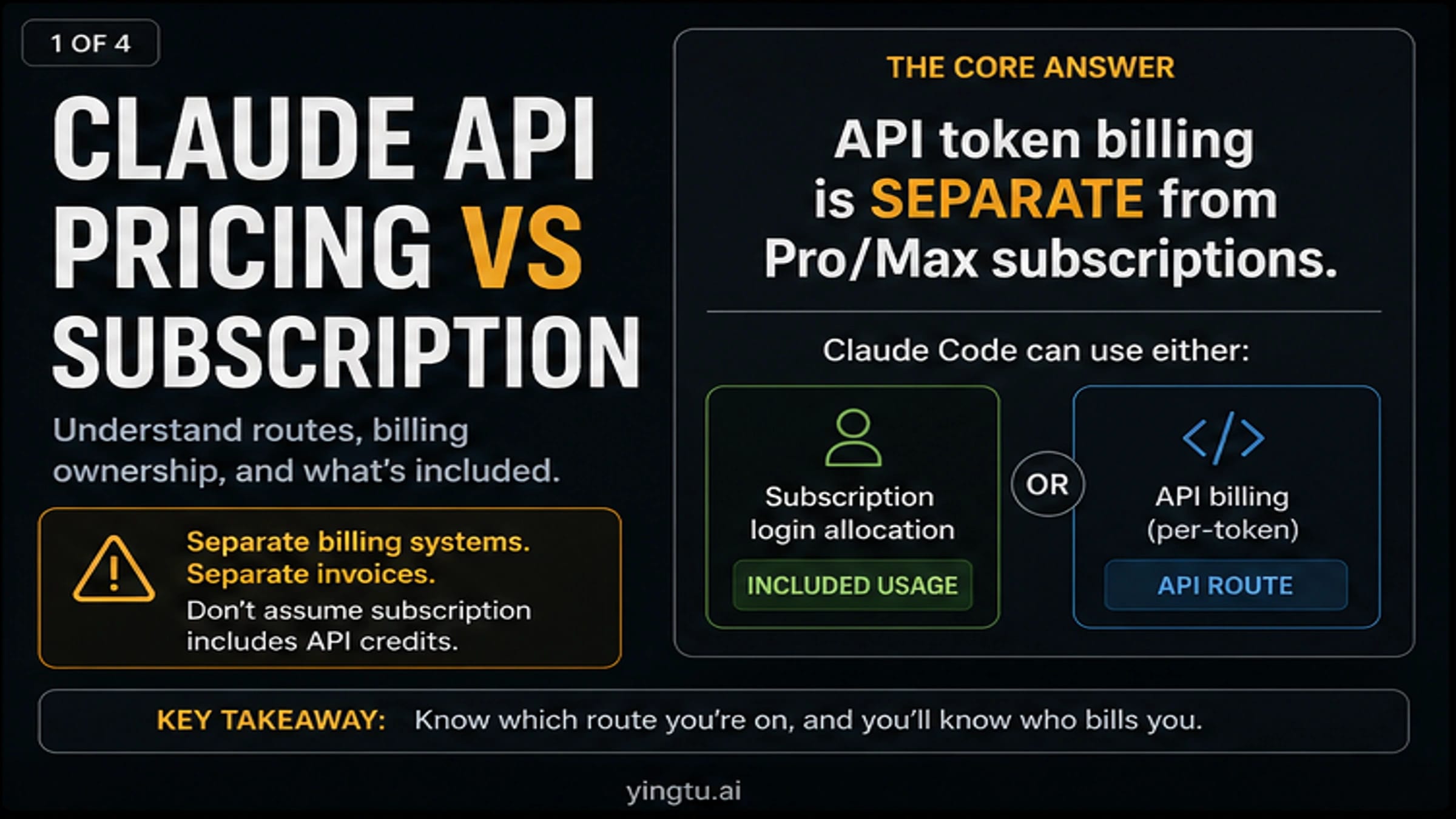
Claude's official name for paid overflow is now usage credits. The cost answer is direct: after a Pro, Max 5x, or Max 20x plan reaches its included usage limit, continued Claude or Claude Code work can switch to consumption-based pricing at standard API rates. If you pre-purchase a usage bundle, Anthropic currently lists bundle discounts, but the marginal work is still paid usage rather than free subscription capacity.
As of June 4, 2026, the practical question is not "is extra usage expensive?" It is "which route owns the next request?" Anthropic's plan guide lists Pro at $20/month or $200/year, Max at $100/month for 5x Pro capacity and $200/month for 20x Pro capacity. Usage credits are billed separately at standard API rates, while usage bundles can discount pre-purchased credits by 10%, 20%, or 30% depending on bundle size. Direct API usage is still priced by model and token category through Console or supported cloud routes.
| Route | What it covers | Current price anchor | What triggers a separate bill | Check before upgrading |
|---|---|---|---|---|
| Claude Pro subscription | Included Claude app usage and supported Claude Code subscription login usage | $20/month or $200/year | Normal Claude Console/API calls are not included | Settings > Usage, plan page, Claude Code /status |
| Claude Max subscription | Higher included Claude usage and supported Claude Code subscription login usage | $100/month for Max 5x or $200/month for Max 20x | API keys and usage credits still bill separately | Plan limit notice, Settings > Usage, /status |
| Claude Code with subscription login | Official Claude Code sessions charged against eligible subscription allocation | Included until plan allocation is hit | Adding ANTHROPIC_API_KEY can move work to API billing | /status first, then /cost if API billing appears |
| Usage credits, also called extra usage | Continued use after subscription limits when enabled | Billed separately at standard API rates | Every overflow request is no longer bundled plan usage | Usage credits setting, cap, balance, and billing page |
| Usage bundles | Pre-purchased usage credits for paid plans | $50 bundle costs $45, $250 costs $200, $1,000 costs $700 on Anthropic's usage bundles support page | Use beyond the monthly discounted-bundle cap returns to standard rates | Bundle size, monthly cap, dashboard balance |
| Claude API / Console | Software, automation, product integration, batch jobs, exact metering | Per-model token pricing, with caching and batch effects | Every API call, tool call, and token category can affect spend | Console Billing, rate limits, spend limits, API key owner |
The stop rule is simple: do not buy Pro or Max because you need API credits for an app. Buy a subscription for human Claude usage and eligible Claude Code allocation; use API billing for software, automation, team controls, parallel throughput, or any workflow that must run through an API key. Use usage credits or bundles only when you understand that the overflow work is paid separately from the base subscription. If you already use Claude Code, check /status and the ANTHROPIC_API_KEY environment before comparing plans, because those two details decide whether the next session burns subscription allocation or API budget.
What a Claude Subscription Covers
Claude subscriptions are plan allocations for Claude product surfaces. The Claude plan guide lists Free, Pro, Max 5x, and Max 20x for individual users, but the plan label does not turn the account into an API wallet. If you want both the Claude app and API access, you set up Console access and pay for API calls separately.
That distinction is why a subscription can feel cheaper for daily work without being the cheaper API route. A human who asks Claude questions, uploads files, uses projects, or runs official Claude Code sessions through a subscription login is consuming bundled plan allocation. A backend service that sends requests through an API key is consuming token-metered API usage. Those two flows can happen on the same account, but they are not the same bill.
Max should be read the same way. The Max plan support page documents Max 5x at $100/month and Max 20x at $200/month on the checked page. That buys higher included Claude usage than Pro, not an unlimited API credit pool. If your bottleneck is interactive Claude, large chat sessions, or Claude Code through the supported subscription login route, Max may be rational. If your bottleneck is API traffic from an app, worker, toolchain, or automation, Max does not replace API billing.
This is also where many shortcut claims break. "Subscription is 30x cheaper than API" may describe one person's Claude Code workload, prompt length, model choice, and session behavior. It does not decide your route. A subscription is usually the first route to try for heavy human-in-the-loop Claude work. API is still the right route when the workload must be programmatic, metered, parallelized, governed by API keys, or owned by a product backend.
What Claude API Pricing Covers
Claude API pricing belongs to Anthropic's developer billing surface: Claude Console, direct API usage, and supported cloud platform routes such as AWS, Google Cloud, or Microsoft routes where those are configured. The official Claude API pricing page lists prices per million tokens by model and token category. The important categories are base input, output, cache writes, cache hits, and sometimes tool or feature charges.
That means an API cost comparison needs a formula, not only a plan row:
| API cost driver | Why it matters |
|---|---|
| Model choice | Opus, Sonnet, and Haiku rows have different input and output prices. |
| Input tokens | Long prompts, files, tool schemas, and prior context increase the bill. |
| Output tokens | Verbose answers and code generation can cost much more than short classifications. |
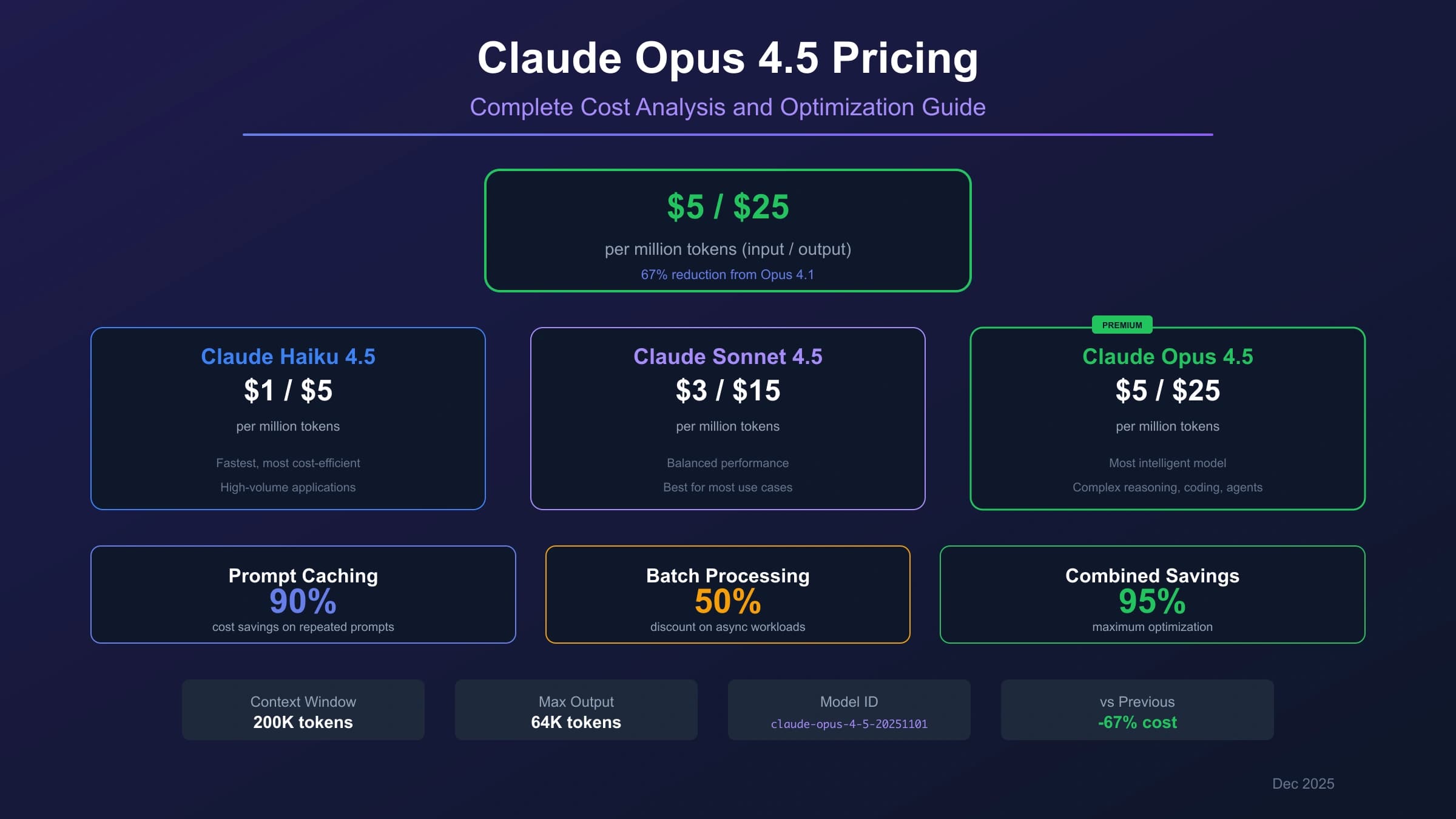
| Prompt caching | Cache writes cost more than normal input at write time, but cache hits are much cheaper. |
| Batch processing | The Batch API is documented with a 50% input/output discount for eligible asynchronous work. |
| Tools | Client-side tools add tokens, and some server-side tools can have separate charges. |
| Rate and spend limits | Console and organization settings can cap or throttle usage. |
The current pricing page shows, for example, Opus 4.8 at $5 per million base input tokens and $25 per million output tokens, Sonnet 4.6 at $3 input and $15 output, and Haiku 4.5 at $1 input and $5 output. Those rows are useful anchors, but they should be rechecked before you publish a budget or customer-facing quote. Tokenizer changes, cache behavior, tool calls, data residency settings, cloud-platform premiums, and model launches can move real spend.
API pricing is not worse by default. It is simply a different contract. It gives you API keys, request logs, spend controls, rate-limit visibility, integration patterns, and deployment control. For production software, those are often more important than the cheapest possible interactive plan. If a team is building a customer feature, nightly automation, CI agent, data pipeline, internal tool, or multi-user product, API billing is usually the honest route because it follows the software workload instead of a single person's subscription allocation.
How Claude Code Chooses Billing
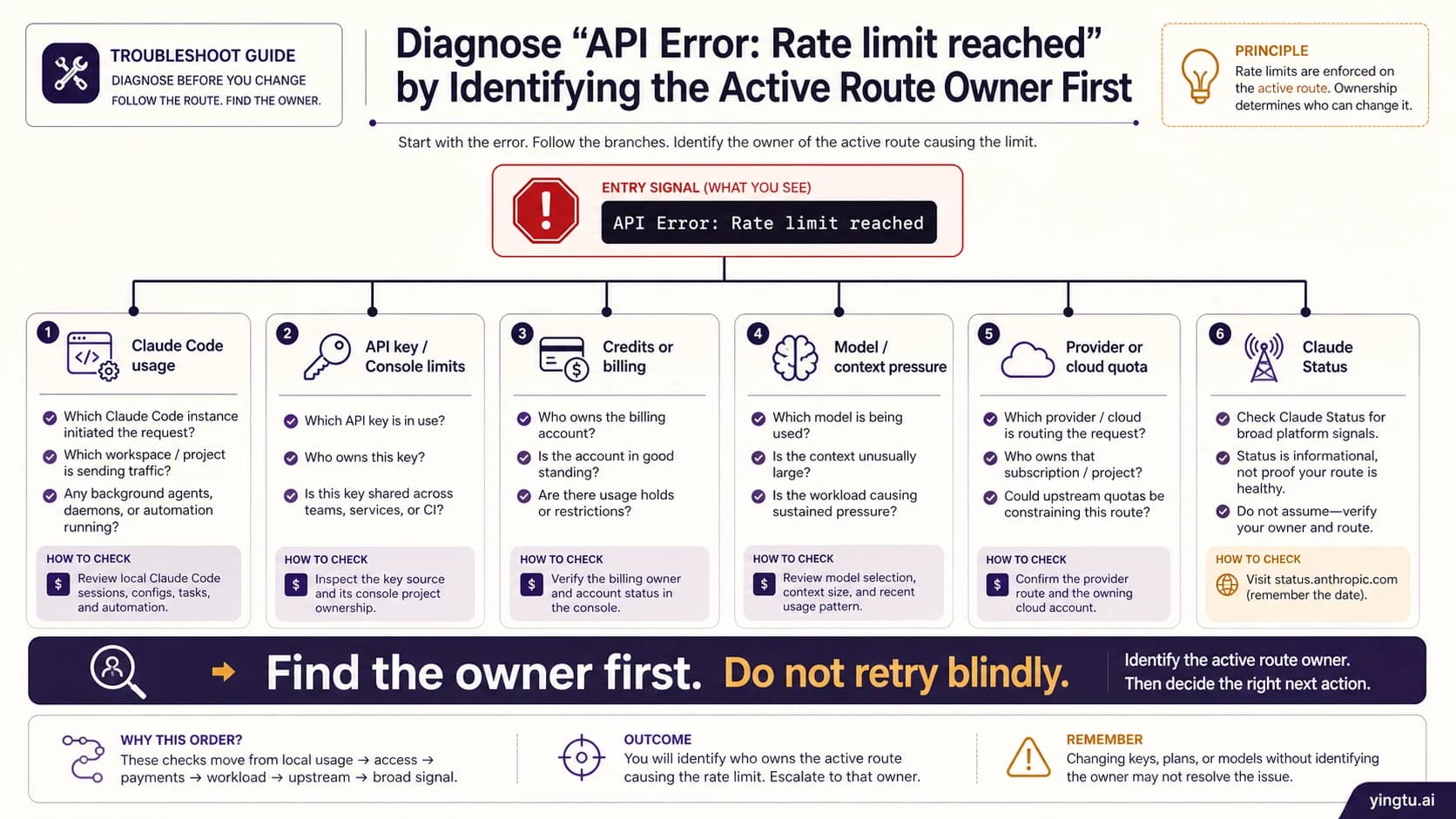
Claude Code is where the confusion becomes expensive, because it can sit on either side of the split. Anthropic's Claude Code with Pro or Max support page explains that Claude Code can use Pro or Max credentials. It also says that if ANTHROPIC_API_KEY is set, Claude Code uses the API key instead of the subscription route and generates API usage charges.
That makes the first diagnostic very practical:
- Run
/statusinside Claude Code before a long session. - Check whether the session is using a subscription login route or an API key route.
- Inspect your shell, terminal profile, CI environment, and project env files for
ANTHROPIC_API_KEY. - If the session is API-billed, use
/costduring the session and Console Billing after the session. - If the session is subscription-billed, watch Settings > Usage and plan allocation instead of treating
/costas the primary meter.
The Claude Code models and limits page adds the operational detail: API-key paths are pay-as-you-go and billed per token to Console or supported cloud accounts, and long sessions can resend previous context. In a coding session, that context can include file summaries, conversation history, tool outputs, and repeated instructions. Clearing or compacting context can be a cost-control move, not just a cleanliness habit.
This is why "I have Max, why am I seeing API spend?" has a concrete answer. A Max subscription can cover supported Claude Code usage when you are authenticated through the subscription route. It does not protect a session that has been routed through an API key. The route is not decided by what plan you bought; it is decided by how the tool is authenticated and whether API credits or API keys are active.
What Usage Credits and Bundles Change
Usage credits are neither a normal API project nor a normal subscription bucket. Anthropic's usage credits support article describes them as a way for paid plan users to keep going after included limits. The key detail is the pricing model: usage credits are billed separately at standard API rates.
That makes the old phrase "extra usage" useful as a search shortcut but dangerous as a billing label. It is useful when you are near a deadline, need continuity, and would rather pay for overflow than stop. It is dangerous when you assume the subscription remains the only bill. After usage credits start, the decision changes from "am I inside my plan allocation?" to "am I comfortable with API-rate consumption for the next requests?"
Usage bundles change the unit economics but not the route. Anthropic's usage bundles support article currently lists three discounted bundle examples: a $50 bundle paid at $45, a $250 bundle paid at $200, and a $1,000 bundle paid at $700. The same page says individual Pro and Max subscribers can purchase up to $2,000 worth of discounted bundles per month; additional usage beyond the cap is billed at standard usage credit rates. Team plans have a different monthly cap.
Treat usage credits like a bridge:
| Situation | Better default |
|---|---|
| Occasional overflow after a heavy day | Usage credits can be reasonable if the cap is clear. |
| Predictable overflow with enough volume | Compare usage bundles against Max and API, because bundles can discount paid overflow. |
| Daily overflow on the same account | Revisit Pro vs Max and workflow shape. |
| Claude Code sessions that constantly overflow | Check /status, context size, and whether Max or API is the honest route. |
| Product or automation traffic | Use API billing directly instead of hiding it behind usage credits. |
Set a cap before you rely on usage credits. Also keep the language precise in teams: usage credits are not free plan extension, not included subscription allocation, and not the same as normal API project billing with API keys and Console controls. They are a paid continuation route that can make sense only when the reader understands the bill owner.
Which Route Should You Choose?
The best route follows the workload, not the most dramatic savings story.
| Workload | First route to consider | Why |
|---|---|---|
| Personal Claude chat, writing, analysis, file work | Pro | The work is human-operated and fits subscription allocation. |
| Heavy interactive Claude or heavy official Claude Code usage | Max | Higher included usage can be cheaper and simpler than constant overflow. |
| Claude Code inside a developer's terminal | Subscription login first, then verify | It may use included plan allocation unless an API key route is active. |
| CI jobs, background agents, product features, custom tools | API | The workload is software, not a human chat session. |
| Occasional over-limit continuation | Usage credits with cap | It preserves flow but shifts the marginal work to API-rate billing. |
| Predictable paid overflow on a subscription account | Usage bundles | They can discount overflow credits, but they still draw down after included limits. |
| Team governance, budget ownership, key rotation, logs | API or Team/Enterprise planning | The route must match ownership and controls, not just unit price. |
If the work is mostly one person's interactive Claude usage, start with subscription logic. Pro is the low-risk baseline; Max is the upgrade when the user's real limit pain is included usage, not API need. If the work is a product, script, backend, integration, queue, benchmark harness, support bot, or anything that must run without a person sitting inside Claude, start with API logic.
If the work is Claude Code, do not decide from plan labels alone. Decide from route evidence. A developer using Claude Code all day with subscription login may get strong value from Max. A developer running the same commands inside an environment with ANTHROPIC_API_KEY may be generating API charges. The difference can be one environment variable.
How to Control API Spend Without Pretending It Is a Subscription
API spend is controllable, but the controls are API-native. The API rate limits page describes spend limits and rate limits such as requests per minute, input tokens per minute, and output tokens per minute. Those limits are organization-level, with workspace controls available for some setups. They are not the same as a Pro or Max session limit.
The strongest API cost controls are usually boring:
- Pick the smallest model that passes the task. Haiku, Sonnet, and Opus exist for different cost-quality tradeoffs.
- Reduce repeated context. Use
/clear,/compact, better retrieval, smaller file sets, and prompt caching where it fits. - Cap output length. Output tokens often dominate coding, analysis, and report-generation tasks.
- Use batch for asynchronous work that does not need live interaction.
- Separate exploration from production. A messy interactive prompt should not become a backend template without trimming.
- Set spend limits before testing a new agent, queue, or loop.
Prompt caching deserves special mention. Cache writes cost more than base input at write time, but cache hits are far cheaper than sending the same context again. For repeated system prompts, stable policy text, shared documentation, or large context reused across many calls, caching can make API cheaper without changing the route. Batch processing has a different fit: it helps when work can wait and be processed asynchronously.
The right conclusion is not "API is expensive" or "subscription is cheaper." The right conclusion is that subscription bundles human/product usage, while API exposes workload economics. When the workload is a product or automation, that visibility is part of what you are buying.
FAQ
Does Claude Pro include API usage?
No. Claude Pro does not include normal Claude Console or API usage. A Pro subscription covers Claude product allocation; API calls are billed separately through Console or supported cloud API routes.
Does Claude Max include API credits?
No. Max gives higher included Claude usage than Pro, but it is not an unlimited API credit plan. API keys, usage credits, and API billing can still create separate API-rate bills.
Is Claude Code cheaper with a subscription or API?
It depends on the route and workload. Claude Code through a supported Pro or Max subscription login can use included plan allocation. Claude Code with ANTHROPIC_API_KEY set uses API billing. Run /status before comparing plans.
What are usage credits in Claude pricing?
Usage credits let paid plan users continue after included limits, but the overflow is billed separately at standard API rates. Treat "extra usage" as a reader shortcut for usage credits, not as free plan extension.
Do usage bundles make extra Claude usage cheaper?
They can. Anthropic currently lists discounted usage bundles for paid plans, with larger bundles receiving larger discounts, but the credits still apply after included usage is exceeded. Additional usage beyond the monthly discounted-bundle cap is billed at standard usage credit rates.
When should I choose Claude API pricing instead of a subscription?
Choose API billing when the workload is software: app integration, automation, background jobs, CI, multi-user products, exact metering, key control, logs, spend limits, or rate-limit management.
When is a Claude subscription the better choice?
Choose a subscription when the work is mostly human-operated Claude usage, including eligible official Claude Code sessions. Pro is the baseline; Max makes sense when included usage is the actual bottleneck.
How do I know what billed my Claude Code session?
Start with /status. If the route uses an API key, watch /cost and Console Billing. If it uses subscription login, watch Settings > Usage and plan limits. Also check whether ANTHROPIC_API_KEY is set in the shell or project environment.
Are Reddit savings numbers reliable?
They are useful pain signals, not universal pricing rules. A 15x, 30x, or 36x savings claim depends on prompt length, context reuse, model, output length, tool behavior, and whether the session was truly subscription-billed.
Can I use both subscription and API on the same account?
Yes, but keep the surfaces separate. Subscription allocation, usage credits, usage bundles, Console API billing, and cloud-platform billing can all coexist. The important task is to know which one owns the current workload.