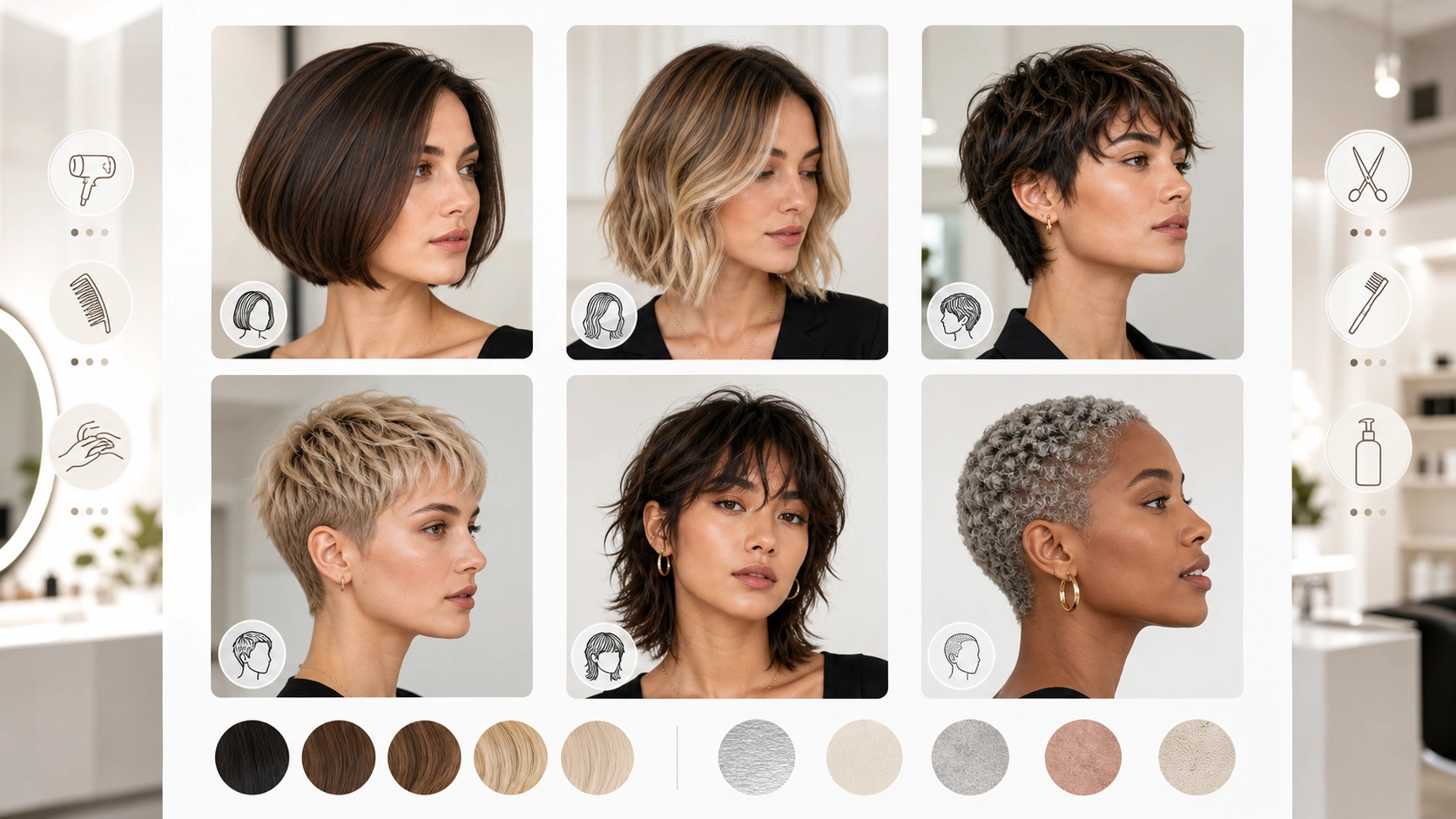
Choosing a short haircut is a fit decision before it is a trend decision. A bob or lob keeps the first chop safer, a bixie or long pixie gives shorter movement without going severe, a pixie or crop is the bold reset, a shag adds texture, and an undercut only makes sense if you want the upkeep that comes with an edge.
The practical filter is your texture, density, face/features, glasses, hairline, cowlicks, daily styling tolerance, and how often you will return for trims. Before the appointment, bring two or three realistic references your stylist can cut from, ideally with front, side, and back views, plus one clear no.
Start here:
| If you want... | Start with | Watch out for | Ask your stylist about |
|---|---|---|---|
| A safer first short cut | Bob or lob | Ends that sit too bulky at the jaw | Length, perimeter weight, face framing |
| Short hair with movement | Bixie or long pixie | Too much crown bulk or uneven grow-out | Soft layers, nape shape, side length |
| A bold reset | Pixie or cropped cut | Frequent trims and exposed hairline/cowlicks | Fringe, temple length, nape taper |
| Texture and softness | Short shag | Over-thinning fine hair or widening thick hair | Layer depth, bang shape, curl pattern |
| A sharper edge | Undercut or asymmetric crop | Maintenance every few weeks | Grow-out plan, hidden versus visible undercut |
Start With The Cut Family, Not A Random Photo
Most short haircut mistakes begin with a beautiful reference photo that is not actually a usable decision. The photo may show the right mood, but the cut could depend on a different hair density, a professional blowout, a hidden undercut, a stronger jawline, extensions, or a styling routine you will not repeat on a weekday morning.
Cut family is the cleaner first choice.
A bob keeps most of the shape around the jaw, cheek, or chin. It can be blunt, softly layered, French-inspired, tucked behind the ear, or cut with bangs. It is often the easiest short haircut to understand because you still have a clear perimeter and enough length to restyle.
A lob is not truly short on everyone, but it is the best bridge when you are nervous. It lets you test shorter proportions while keeping ponytail options, soft bends, and easier grow-out. If you are cutting from long hair, a lob can be a useful first appointment before a real bob or pixie.
A bixie sits between a bob and a pixie. It gives shorter shape, more lift, and more personality than a bob, but it usually keeps more softness around the ears and neckline than a classic pixie. It is good when you want short hair that still moves.
A pixie or crop exposes more of the face, neck, hairline, and growth pattern. It can look effortless, but it is not automatically low effort. The shorter the cut, the more visible the shape becomes as it grows.
A short shag is built around layers and texture. It can make waves and curls feel intentional, but it needs a stylist who understands how much weight to remove. Too little layering feels heavy. Too much thinning can make fine hair look sparse.
An undercut changes the maintenance contract. It can remove bulk and create a sharper silhouette, but it grows out visibly. Choose it only if you like the edge enough to maintain it or have a grow-out plan.
Match The Cut To Texture, Density, And Features
Hair texture decides how the cut behaves after the salon finish is gone. Straight fine hair can show every line, so blunt bobs, soft pixies, and lightly layered crops often work better than aggressive thinning. Thick straight hair may need weight removal, but too much texturizing can create puffiness at the wrong place.
Wavy hair usually benefits from movement. A bixie, shaggy bob, French bob, or layered crop can work well when the layers support the wave instead of breaking it apart. Curly and coily hair need more shape conversation before cutting: dry-cutting, shrinkage, curl grouping, and the final silhouette matter more than a flat inspiration photo.
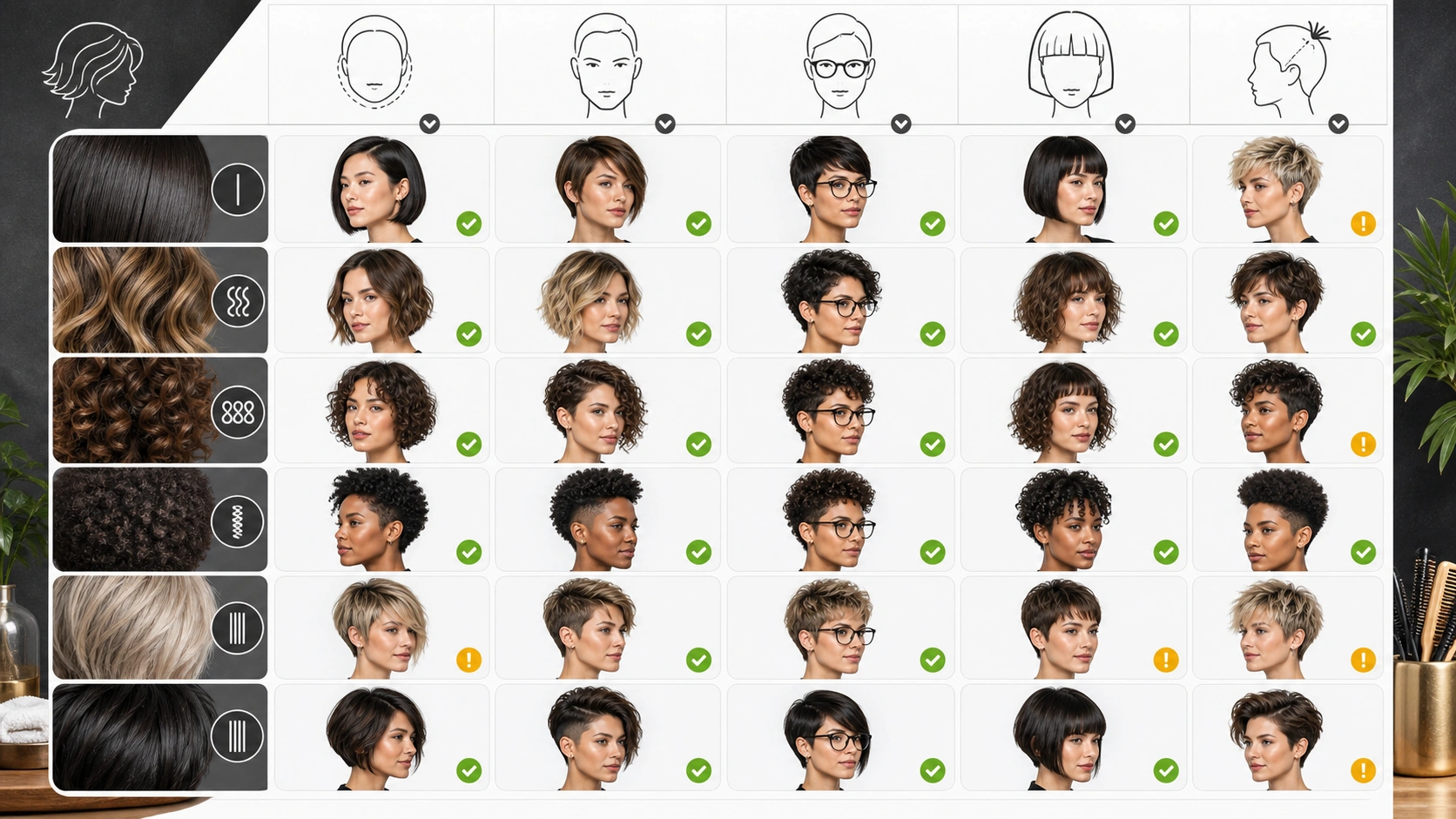
Face shape matters less than feature placement. A round face is not blocked from a bob; the question is where the weight lands, whether the fringe shortens the face, and whether the side length creates balance. A strong jaw can carry bluntness beautifully, but a softer textured perimeter may feel easier if you do not want the jaw to be the main feature.
Glasses also change short hair. A pixie with heavy side pieces can fight the frame. A bob that sits exactly on the glasses arm can flip unpredictably. Bring your everyday frames to the salon and ask where the shortest pieces should land when the glasses are on.
Hairline and cowlicks are the quiet deal-breakers. A short fringe may not sit the way it does in a photo if your front hairline pushes it open. A nape crop may need a different taper if the hair grows upward. A side part pixie may resist if your crown growth pattern pulls the opposite way. These are not reasons to avoid short hair; they are reasons to ask for a cut that respects the growth pattern.
Separate Daily Styling From Salon Upkeep
"Low-maintenance short hair" can mean two different things. One cut may take only five minutes each morning but need a trim every four to six weeks. Another may grow out softly for longer but require more daily styling to look intentional. A useful decision separates those two costs.
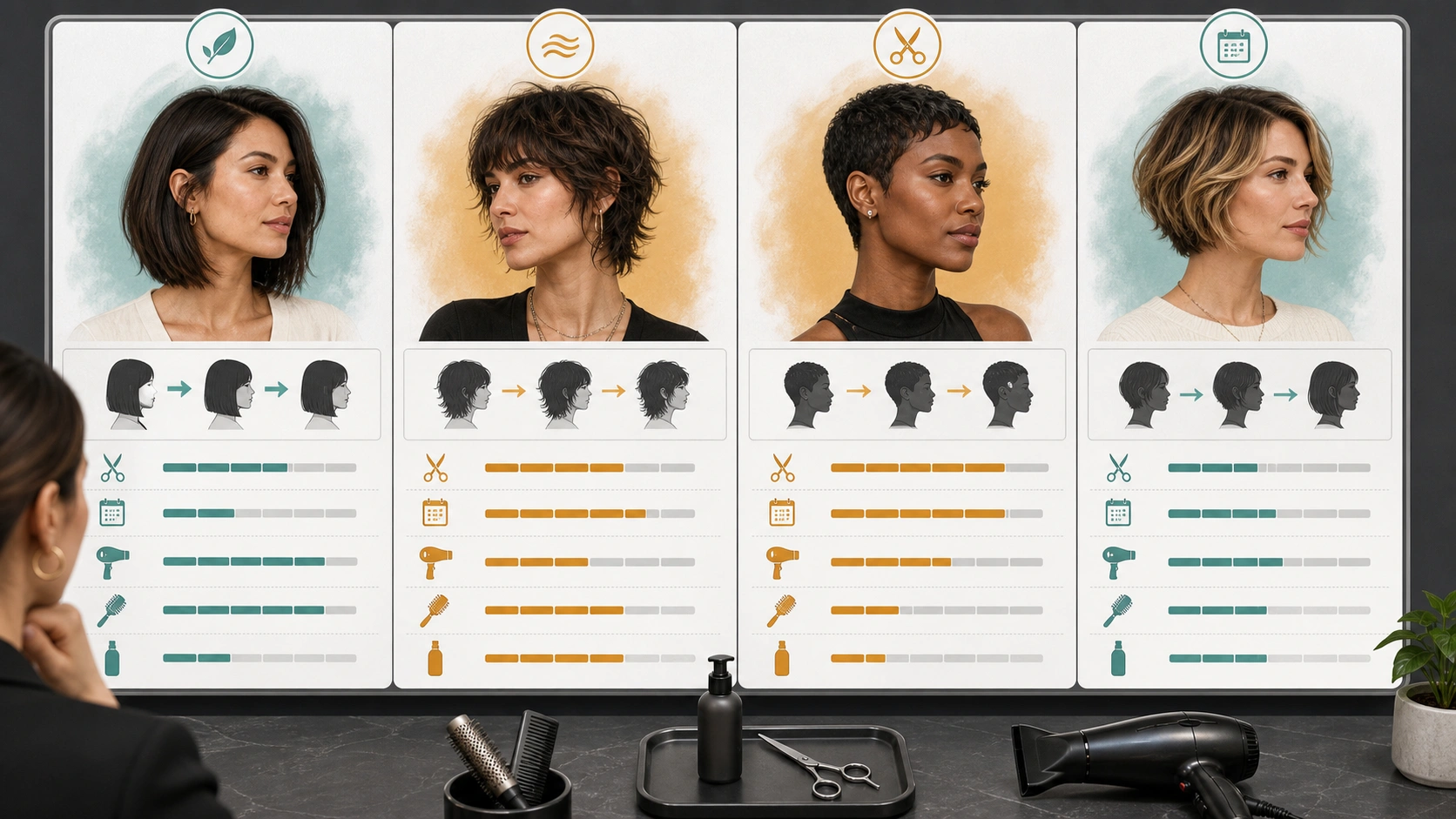
A blunt bob can be low effort if your hair naturally falls into the shape. If your ends flip, your hair swells with humidity, or the line needs to stay very sharp, it may require more blow-drying or hot-tool work than expected. A lob is usually more forgiving because there is enough length for bends, clips, or a small tie-back.
A pixie can be fast every morning when the cut is right. Wet hands, a small amount of product, and one directional blow-dry may be enough. The tradeoff is trim frequency. When a pixie loses the nape, sideburn, or crown shape, it stops looking intentional quickly.
A shag or bixie can hide grow-out better because the shape is already layered, but daily styling may include curl cream, salt spray, diffuser time, or deliberate piece separation. If you hate product, say that before the cut. A stylist can leave more weight, soften the fringe, or choose a shape that does not depend on texture styling.
The most useful salon question is not "Is this low maintenance?" Ask instead:
| Maintenance question | Why it matters |
|---|---|
| How long will this take on my normal hair day? | Salon finish can hide daily reality. |
| How often does the shape need a trim? | Very short cuts lose architecture quickly. |
| What happens if I grow it out for three months? | Some cuts become a soft bob; others become awkward bulk. |
| Which product or tool is actually required? | A cut that needs a round brush, paste, or diffuser is not product-free. |
| What should I avoid asking for? | The stylist can name the part of the reference that will not work on your hair. |
Build References Your Stylist Can Actually Use
A good reference set is small and specific. Bring two or three images, not twenty. One should show the overall shape. One should show the texture or styling finish. If possible, one should show the side or back. Add one "not this" image if there is a common version you dislike.
The goal is not to copy a face. The goal is to communicate length, weight, fringe, perimeter, nape, layering, and styling finish.
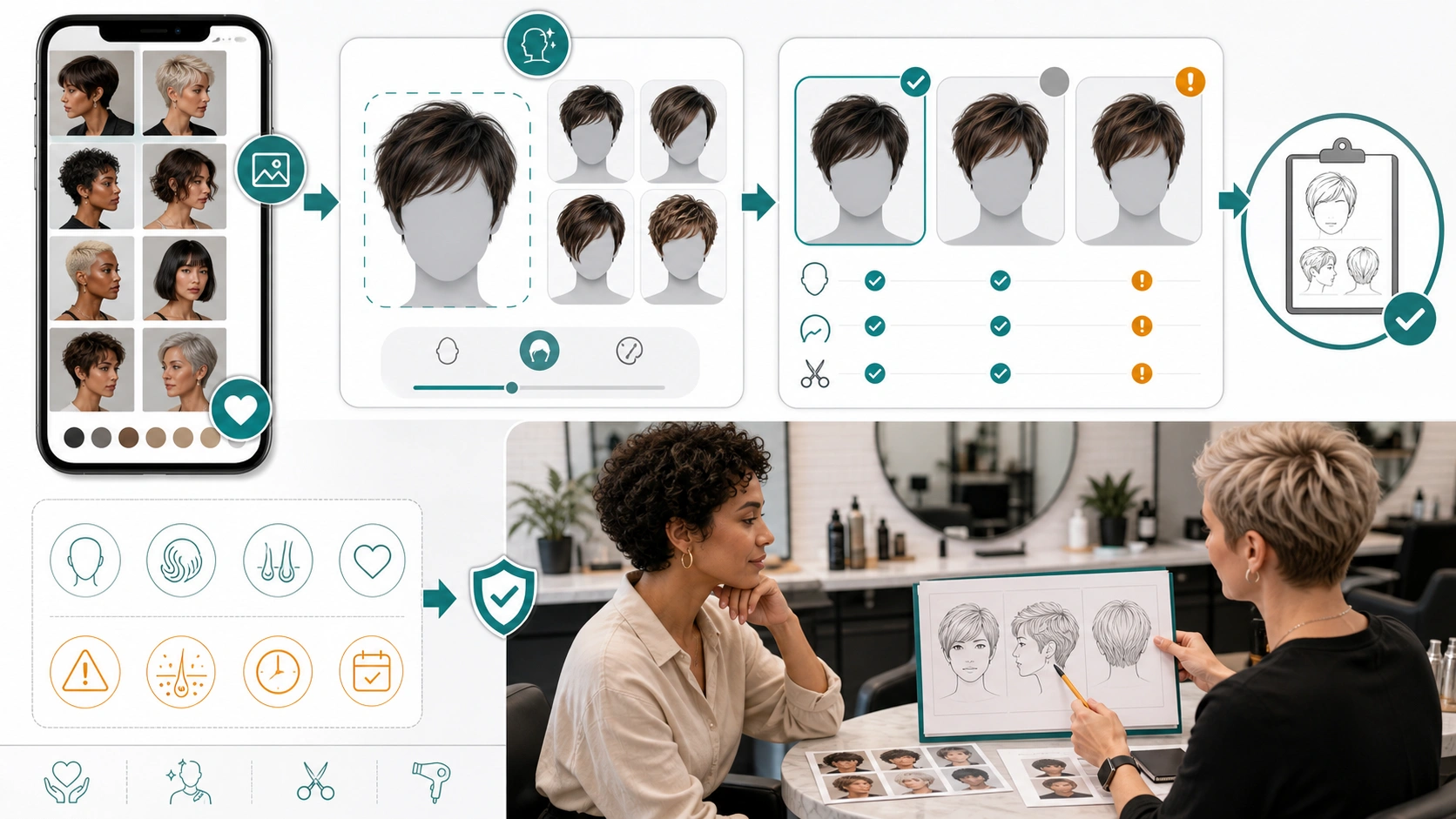
AI hairstyle previews can help at the reference stage when they are treated honestly. A browser image tool such as yingtu.ai can be useful for trying a few silhouette directions or turning a mood into reference variants. It should not be used as proof that the final haircut will look exactly like the generated image. Hair growth pattern, density, curl shrinkage, head shape, styling skill, lighting, and the stylist's cutting method still decide the result.
Use AI or generated references for conversation, not certainty. The best output from a preview session is a clearer brief:
| Reference detail | Bring it as |
|---|---|
| Overall length | Front or three-quarter image |
| Nape shape | Back-view sketch or reference |
| Fringe | Close-up of bang length and separation |
| Layers | Side view showing where movement begins |
| Texture finish | Straight, soft wave, natural curl, or piecey styling |
| Deal-breaker | One image that shows what you do not want |
If a generated reference looks great but ignores your hair texture, keep only the idea. Ask the stylist what must change for your real hair.
Turn The Idea Into Salon Language
"I want short hair" is too broad. "I want a French bob" is better, but it still may not say enough. A salon brief should describe the parts a stylist controls.
Use this structure:
| Brief field | What to say |
|---|---|
| Length | "I want the front to sit around my chin" or "I want the shortest pieces above the ear." |
| Perimeter | "Keep the bottom blunt" or "soften the edge so it does not look like a helmet." |
| Layers | "I want movement through the crown" or "keep enough weight so it does not puff out." |
| Fringe | "Curtain fringe below the cheekbone" or "short textured bangs, not a heavy block." |
| Nape | "Soft tapered nape" or "do not shave the neckline too high." |
| Face framing | "Keep pieces that can tuck behind the ear" or "avoid short pieces around the cheek." |
| Thinning | "Remove bulk inside, but do not thin the ends too much." |
| Grow-out | "I want it to grow toward a bob" or "I can come back every month for shape." |
The brief should also include your real routine. If you air-dry, say so. If you never use paste, say so. If you need hair off your face for work, say so. If you wear glasses, headphones, hats, or a headset, say so. Short hair interacts with daily objects more than long hair does.
Style Families: Best Fit And Watch-Outs
Bob
A bob is the most flexible short haircut for women who want a visible change without losing every styling option. It can be chin-length, cheekbone-length, jaw-length, blunt, softly beveled, tucked, or paired with bangs. The main decision is weight: a fine-haired bob often needs a clean perimeter, while thick hair usually needs internal shape so the ends do not stack into a triangle.
Choose a bob if you want polish, a clear shape, and easier grow-out. Be careful if your hair flips strongly at one length, if your neck length changes where the line sits, or if you do not want to style the ends.
Lob
A lob is the safest first step from long hair because it still gives movement, bends, clips, and tie-back options. It also gives you time to learn whether you like shorter proportions around your face. If the lob feels easy after a few weeks, you can go shorter with more confidence.
Choose a lob if you are nervous, have dense hair, need versatility, or want a soft grow-out. Be careful if the length lands at the shoulders and flips in a way you dislike; moving slightly above or below that point may solve the problem.
Bixie
A bixie is a strong option when a bob feels too polite and a pixie feels too exposed. It keeps softness around the face while adding lift and shorter movement. It can work beautifully with waves, light curls, and hair that benefits from crown shape.
Choose a bixie if you want short hair with personality and enough pieces to style. Be careful if you need very low salon upkeep. The shape can grow into bulk around the ears and nape unless the cut has a planned path.
Pixie And Crop
A pixie or crop is the clearest short-hair reset. It can make cheekbones, eyes, earrings, glasses, and neckline more visible. It can also reveal every growth pattern. The best pixies are not simply "short all over"; they are designed around fringe, crown, sides, temple length, and nape shape.
Choose a pixie if you want a bold silhouette and can handle trims. Be careful if you are unsure about your hairline, cowlicks, or how much face exposure you want. A long pixie is often a better first step than a very tight crop.
Short Shag
A short shag is for movement, softness, and texture. It works when the layers are cut for your actual density and wave or curl pattern. It can make thick hair feel lighter and give fine hair a more lived-in shape, but the wrong layering can make fine hair stringy or thick hair wider.
Choose a shag if you like undone texture and are willing to style it. Be careful if you need a smooth corporate finish every day or dislike product.
Undercut Or Asymmetric Crop
An undercut can remove bulk, sharpen the shape, or add a hidden edge. It can also become the most visible part of the haircut as it grows. The decision is not only whether you like the look on day one; it is whether you like the maintenance.
Choose an undercut if you want edge, can return for cleanup, and understand the grow-out. Be careful if you want a soft, low-commitment first short cut.
Regret Checks Before You Cut
Pause before the appointment if the reference depends on a hair type you do not have, if every photo is professionally styled, if you cannot explain the nape or fringe, or if you are choosing the cut only because the face in the photo is beautiful. A haircut reference should survive when you cover the face and look only at length, weight, line, and texture.
Also pause if your lifestyle conflicts with the cut. A high-maintenance pixie may be perfect for someone who enjoys salon visits and product. It is a poor match for someone who wants to disappear from the salon for four months. A blunt bob may be elegant on smooth hair and frustrating on hair that flips in humidity. A shag may look effortless on a model and require product on you.
The best short haircut is not the trendiest one. It is the cut you can maintain, style, explain, and grow out without feeling trapped.
FAQ
What is the most low-maintenance short haircut for women?
A soft bob or lob is usually the safest low-maintenance starting point because it keeps enough length for natural movement and easier grow-out. A pixie can be fast every morning, but it often needs more frequent trims to keep the shape sharp.
Which short haircut is best for fine hair?
Fine hair often benefits from a clean bob, soft crop, or long pixie with controlled layers. Avoid over-thinning the ends. The goal is to create shape without removing the density that makes the hair look fuller.
Which short haircut works for thick hair?
Thick hair can work with bobs, bixies, shags, and crops when the weight is managed inside the cut. Ask for internal debulking, layer placement, and a grow-out plan instead of simply asking for "more texture."
Can curly or coily hair be cut short?
Yes, but shrinkage, curl grouping, and dry shape matter. Bring references with a similar curl pattern and ask how the cut will sit when worn naturally. A flat straight-hair reference is not enough.
What short haircut works for a round face?
A round face can wear a bob, lob, pixie, or shag. The important parts are where the width sits, how the fringe opens the face, and whether the side length creates balance. Avoid choosing by face-shape rules alone.
Are short haircuts good for women over 50?
They can be. The better question is whether the cut supports your texture, neckline, glasses, color, styling routine, and maintenance tolerance. A soft bob, layered crop, bixie, or textured pixie can all work when those details are handled.
Should I use an AI hairstyle preview before cutting my hair?
Use an AI hairstyle preview only as a reference-planning aid. It can help compare silhouettes, bangs, and length ideas, but it cannot guarantee how your real hair will fall, shrink, grow, or respond to styling.
What should I tell my stylist before a short haircut?
Tell the stylist your target length, fringe, side length, nape shape, layer depth, daily styling routine, trim tolerance, and grow-out goal. Bring two or three realistic references and one clear example of what you do not want.